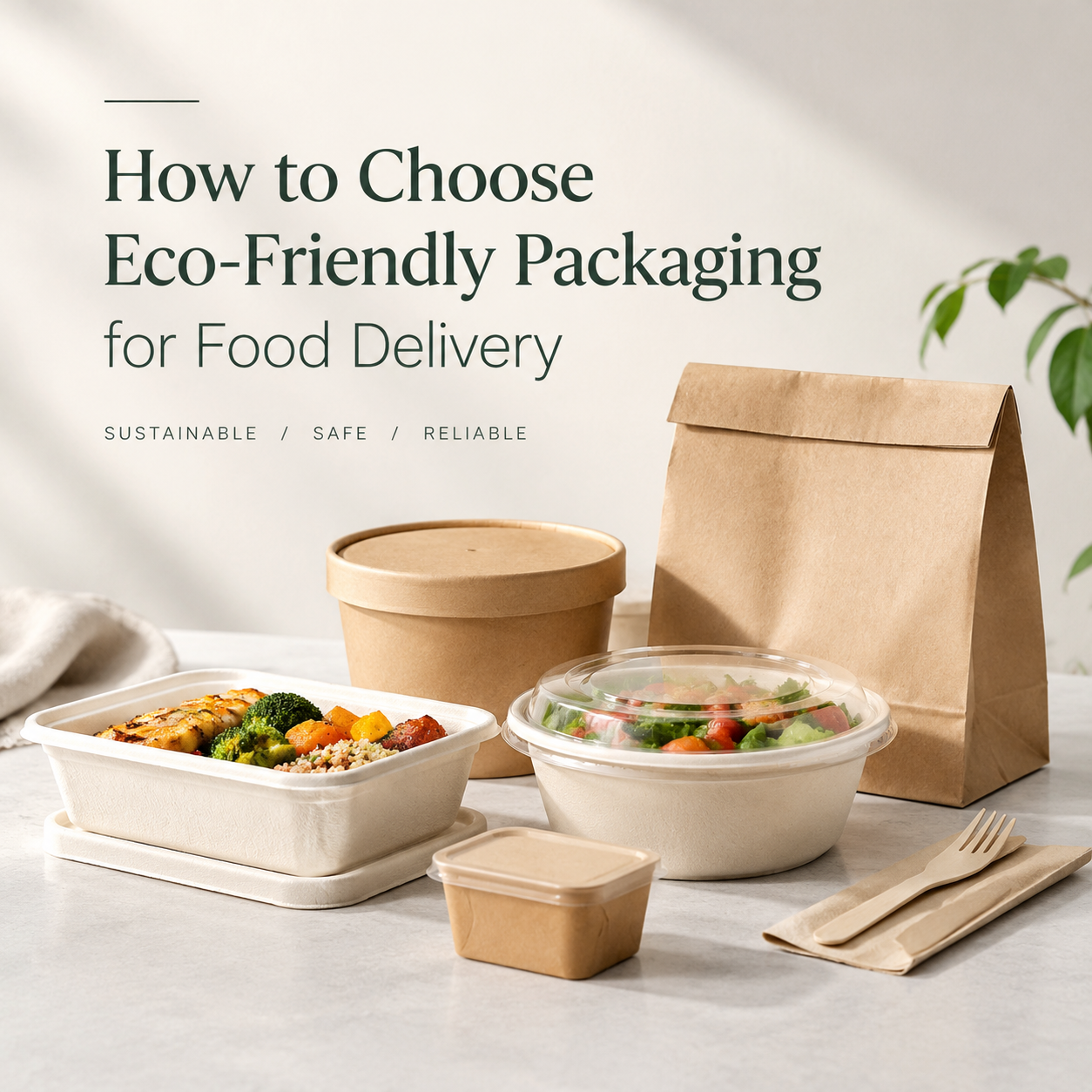
For B2B buyers, picking the wrong eco-friendly packaging doesn’t just hurt your brand image — it can lead to leaky soup orders, unexpected compliance fines, and extra costs you never budgeted for.
Core Material Analysis
When we talk about eco-friendly food delivery packaging in the real supply chain, we mean food-contact safe, bio-based or fiber-based packaging that doesn’t leave microplastics behind, and breaks down properly in standard compost or recycling streams, no fancy industrial facilities required.
Right now, three materials make up over 80 percent of this market, and every single one has tradeoffs no sales rep will tell you upfront. Uncoated kraft paper is cheap but leaks through if you put hot curry in it for more than 15 minutes. Sugarcane bagasse molded fiber is made from leftover sugarcane stalks after juice extraction, it’s sturdy enough for heavy hot meals, but the thickness varies a little batch to batch. Cornstarch blends look and feel almost exactly like regular plastic, but they warp completely if you put something over 90 degrees Celsius inside, which makes it a terrible pick for hot soup deliveries.
| Material Type | Heat Resistance | Degradation Period (Industrial Compost) | Unit Cost vs Conventional Plastic | Best Application Scenario |
| Sugarcane Bagasse | -10 to 120 degrees Celsius | 90 days | 20 to 30 percent higher | Hot meals, biryani, pasta, soup bowls |
| Cornstarch | -5 to 90 degrees Celsius | 180 days | 30 to 40 percent higher | Cold salads, dessert cups, sauce sachets |
| Kraft Paper | -20 to 80 degrees Celsius | 30 to 45 days | 15 to 25 percent higher | Dry pastries, sandwich wraps, outer carry bags |
Industry Standards and Compliance
Two key international standards currently regulate compostable food packaging: the Australian Standard AS 4736 for industrially compostable products, and AS 5810 for home compostable items. Starting March 1, 2026, all certified compostable food containers sold in regulated markets must carry clear, permanent labeling that states their exact compost classification, to avoid improper disposal that prevents full breakdown. For B2B buyers, verifying these standard marks on supplier documentation is a non-negotiable step to avoid non-compliance risks that can lead to product seizures or regulatory fines.
Practical Purchasing Advice
When sourcing wholesale food packaging, do not make decisions based only on material names.
- First, map your exact menu: hot oily dishes need sugarcane bagasse food containers that resist grease leakage, while cold fresh salads can use lighter kraft paper packaging to cut unnecessary cost.
- Second, prepare one backup material option for high-volume SKUs: if your primary cornstarch lid design fails leak testing for soup orders, a matching bagasse lid alternative can prevent urgent production delays.
- Third, keep full records of supplier test reports, food safety certifications, and buyer feedback — this turns random packaging selection into a repeatable, low-risk procurement system that works for long-term orders.
Working directly with a compostable food containers manufacturer also lets you lock in stable pricing and avoid extra markup from middlemen.
FAQ
- Can compostable packaging break down if thrown into regular household waste instead of a compost facility?
No. Most certified compostable products only fully degrade in controlled industrial compost conditions with consistent high temperature and microbial activity. If sent to a general landfill, they will break down no faster than standard paper, and will not release toxic residues during the process. - Is eco-friendly food packaging always much more expensive than conventional plastic?
For bulk orders over 50 thousand units, the price gap between sugarcane bagasse packaging and standard PP plastic containers has dropped to less than 25 percent in 2026. Many suppliers also offer volume discount terms that bring total operating cost very close to traditional plastic options. - Can I get custom disposable food packaging with my brand logo printed on these eco-friendly materials?
Yes. Sugarcane bagasse and cornstarch surfaces all support food-safe water-based printing, with no risk of ink transfer to food during delivery. Most qualified eco friendly food packaging supplier can complete custom sample production within 3 to 5 working days.
Why Work With Hydebiopack
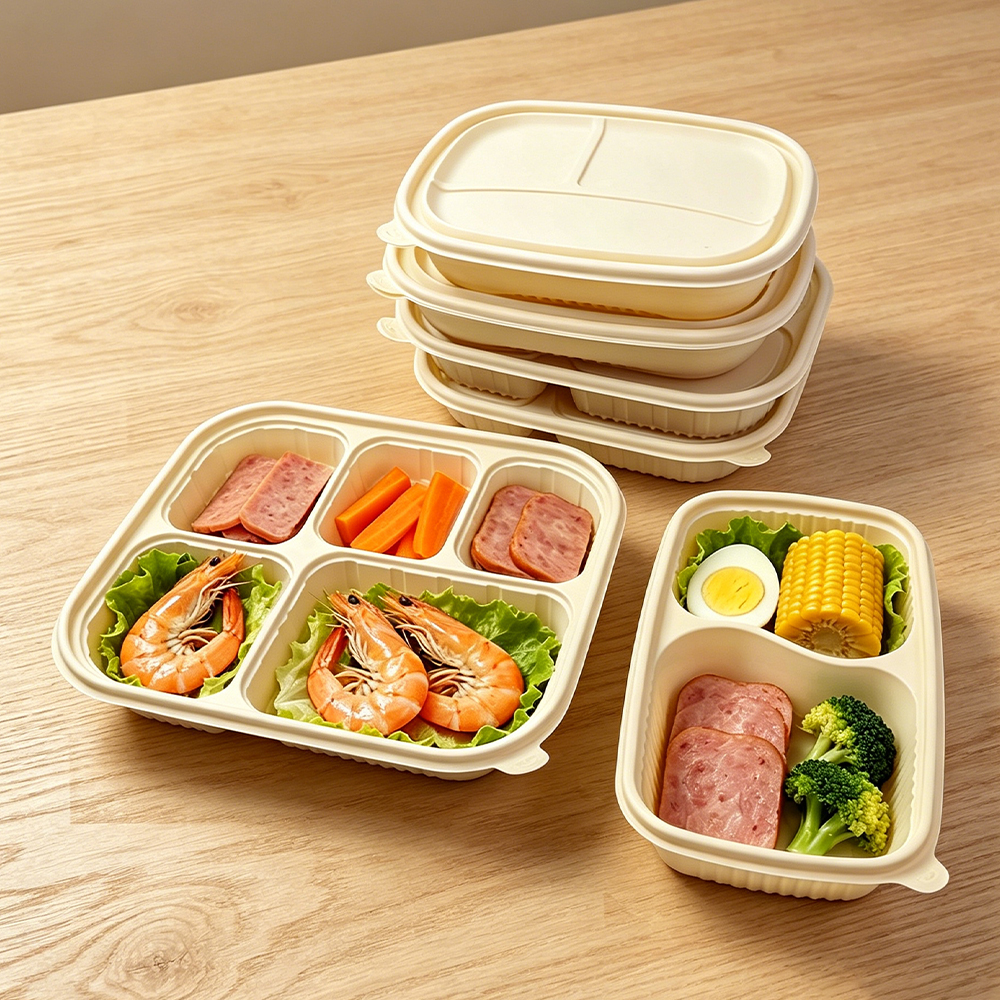
Hydebiopack is a specialized eco friendly food packaging supplier focused on sugarcane bagasse, cornstarch disposable tableware for global food delivery brands, cloud kitchens and restaurant chains. We offer full wholesale food packaging services, from standard stock SKUs ready for immediate shipment, to fully custom disposable food packaging that matches your exact brand design, size and functional requirements.

