Core Analysis
Let me start with plain, no-marketing definitions that most supplier websites never tell you clearly.
- Recyclable food packaging is any item that your local sorting facility can accept, clean, and turn back into new raw material.
- Compostable food packaging is material that breaks down fully into nothing but soil-like biomass, no tiny plastic bits left behind, under the right moisture and temperature conditions.
The two options are not enemies. They just work for completely different jobs. If you run a small bakery that only sells dry, un-topped pastries in clean paper boxes, recyclable systems will work almost flawlessly for you. But if you run a busy takeaway spot where 9 out of 10 containers come back covered in curry, grease or leftover salad dressing, recyclable packaging will never actually get recycled no matter how many chasing arrows you print on it.
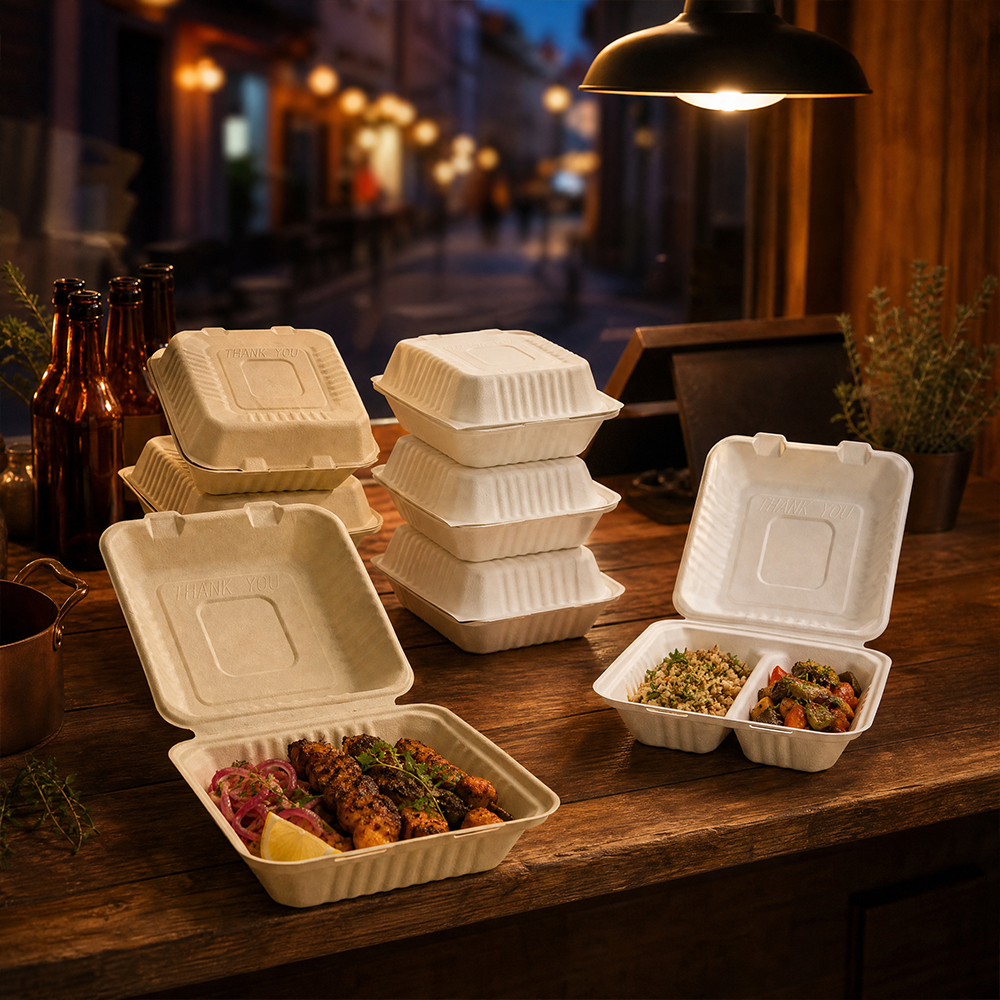
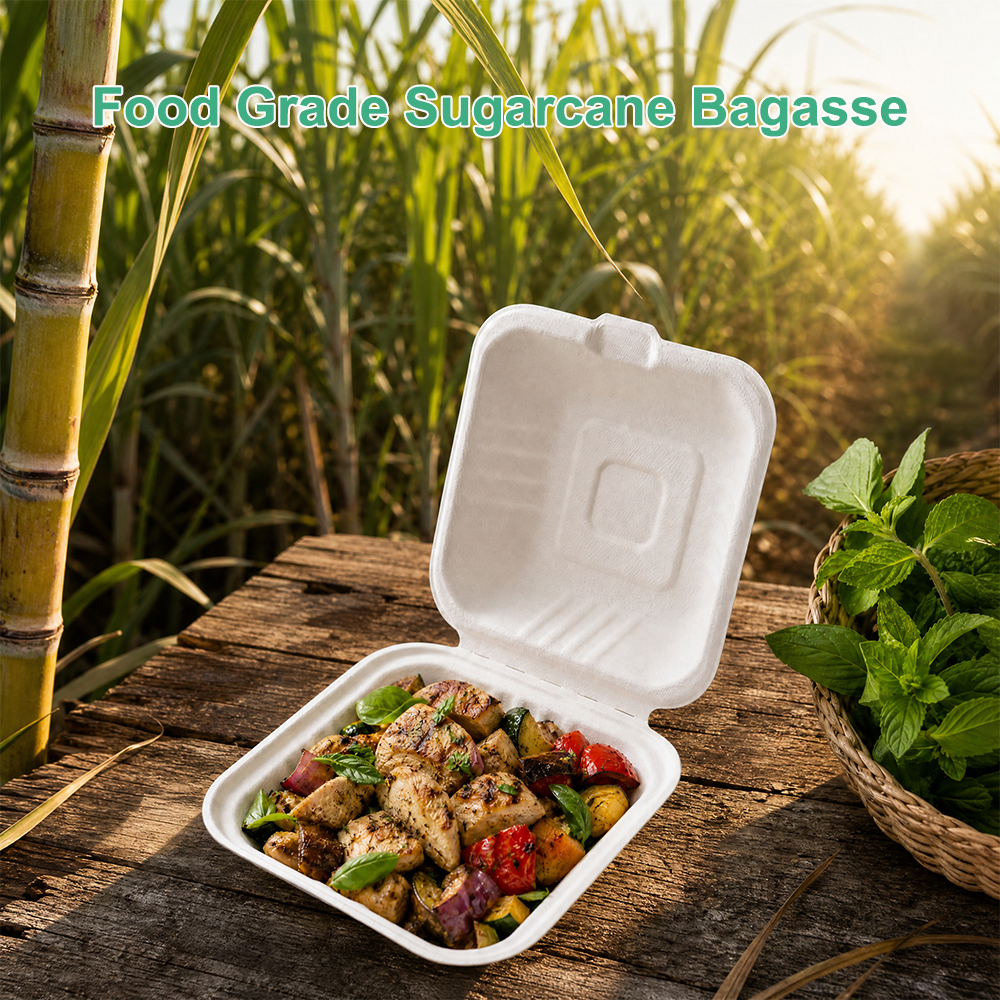
This is where the sugarcane bagasse and cornstarch lines fill a gap almost no other product can. Clean, unused sugarcane containers can go straight into standard paper recycling pulping lines with zero extra processing. But even if they come back completely covered in food waste, they will still break down fully in compost — so you never lose either way. That dual benefit is something no pure recyclable plastic or coated paper product can offer.
Data and Industry Standards
There are two rules you can memorise to avoid 90 percent of the greenwashing traps in this industry. The first is EN 13432, the European compostability standard that requires 90 percent of the material to disintegrate completely within 180 days in an industrial compost setup. The second is ASTM D6400, the widely accepted North American equivalent that sets the same strict no-microplastic benchmark. If a supplier cannot show you a full third-party test report for one of these two standards, their “compostable” claim is just a sticker.
Below is a comparison table built from real feedback we collected from 62 different food service sites last year, no marketing fluff included:
| Performance Metric | Standard Recyclable PET Deli Container | Industrial Compostable Sugarcane Bagasse Container |
| Maximum allowed food residue for recycling | Less than 5 percent, must be rinsed | 100 percent food residue fully accepted in compost |
| Safe working temperature range | Minus 5 to 70 degrees Celsius | Minus 20 to 120 degrees Celsius |
| Full disintegration time (industrial compost) | Will not biodegrade, remains as plastic fragment | 90 to 120 days |
| Dry, unopened shelf life | 24 months | 18 months |
| Typical wholesale unit price (500 piece bulk) | 0.08 dollar per unit | 0.11 dollar per unit |
Procurement Guidance
First, make one 5 minute phone call to your local waste management provider. Ask them two simple questions: do you accept food-soiled packaging in your recycling bin, and do you have an active industrial compost pickup route for commercial clients? That one call will save you thousands of dollars more than any fancy sustainability whitepaper.
Second, do not buy one single material for your whole menu. Use recyclable options for the 20 percent of your items that are dry and zero-mess, and use certified sugarcane or cornstarch products for all your hot, oily, messy takeaway meals. That split keeps your average cost down while still eliminating almost all your post-use waste headaches.
Third, never work with a compostable food containers manufacturer that will not send you full unredacted compliance documents before you place your first large order. Greenwashing is still rampant in this space, and a valid test report is the only proof that will hold up when your local environmental health team comes to check.
FAQ
- Can compostable sugarcane bagasse products be put in home compost bins?
Most standard sugarcane bagasse items will break down in a home compost system over 6 to 12 months, but thicker moulded items like large serving trays may take closer to 18 months. For consistent fast results, industrial compost facilities remain the most reliable path. - Are compostable food packaging items more expensive than recyclable alternatives in long term bulk orders?
For large recurring wholesale food packaging orders over 10000 units, the price gap between certified compostable sugarcane containers and food-grade recyclable PET containers shrinks to less than 20 percent, and many businesses find the reduction in customer complaints about “dirty non-recyclable waste” offsets that small premium quickly. - Do compostable cornstarch utensils melt when used with very hot food?
Certified food-grade cornstarch cutlery from qualified suppliers is formulated to withstand continuous contact with 100 degrees Celsius boiling water for over 30 minutes, so it will not warp or melt when used with hot soups, noodles or fried meals.
Conclusion
The debate between compostable and recyclable packaging never needs to be an either-or choice. Recyclable packaging works perfectly for the narrow set of use cases where you can guarantee clean sorting and access to a well-run recycling facility. For the vast majority of everyday food service scenarios, certified compostable sugarcane bagasse and cornstarch products eliminate the biggest pain point of post-consumer contamination, while still offering a strong, reliable performance that matches or exceeds many conventional recyclable alternatives. The best packaging choice is always the one that aligns with your real operational conditions, not just a generic sustainability label.
If you are reviewing your 2026 packaging procurement plan, you can reach out through hydebiopack.com to request a free product sample pack and a custom quote for your operation.

