
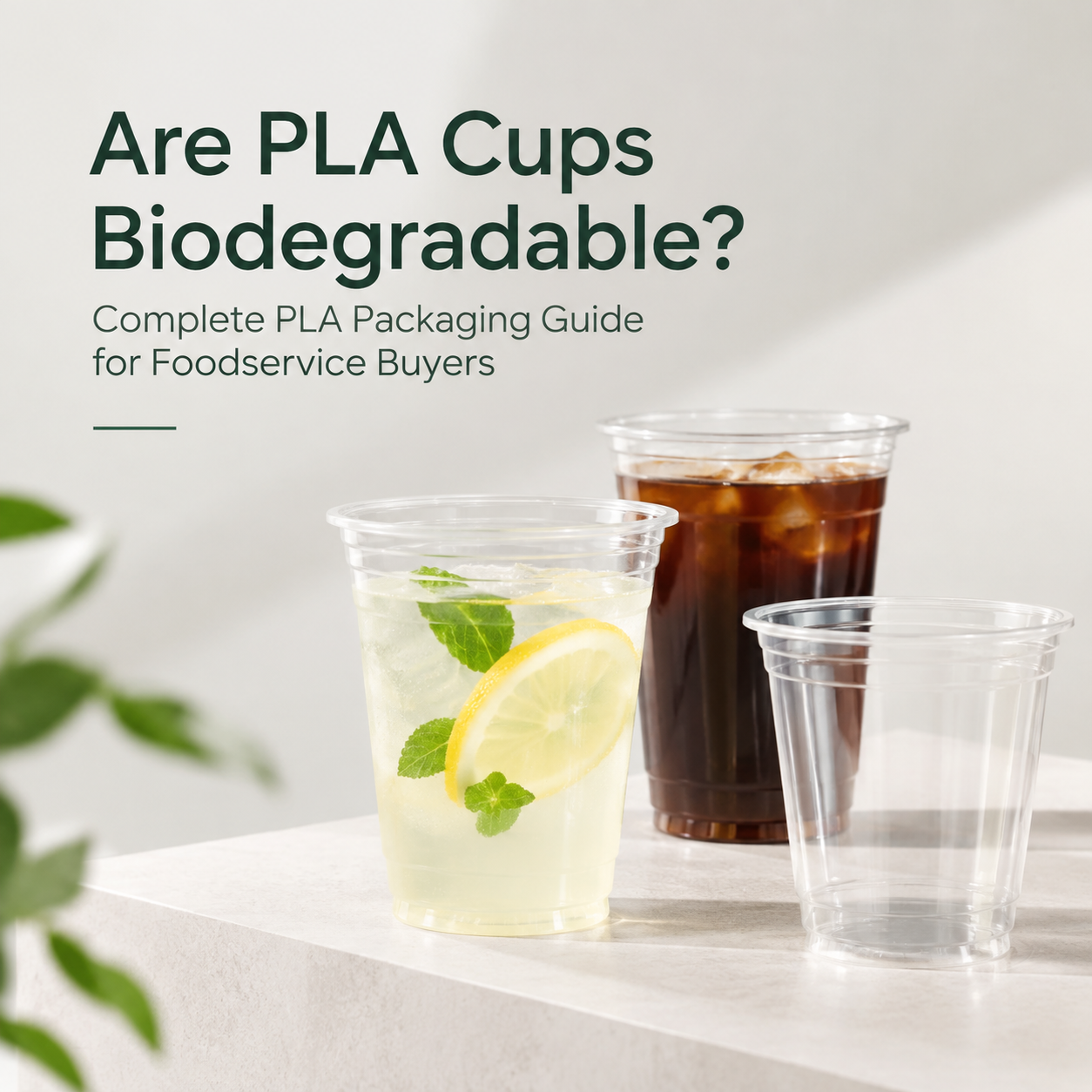
Background
For foodservice operators, wholesale food packaging buyers and eco friendly food packaging supplier partners, the shift away from single-use fossil plastic cups has created widespread confusion around PLA performance. Many buyers still ask whether PLA cups break down as advertised, or if they are just another “greenwashed” alternative.
This guide breaks down real-world PLA behaviour, not just marketing claims, for teams sourcing custom disposable food packaging for cafes, event caterers and national food chains.
Data and Industry Standards
Global PLA packaging market data shows the segment is growing at a steady 3.6% CAGR to 2034, with food service packaging making up the largest share of new volume. For foam-based PLA bead foam packaging, the 2025 average selling price sits at USD 2750 per tonne, with food and beverage end-use demand forecast to grow 15.6% annually through the next decade.
| Material | Industrial Compost Time | Oil-Based | Suitable for Hot Drinks >85°C |
| PLA Cup | 45–90 days | No | Limited, with heat-resistant grade |
| Conventional PP Cup | >200 years | Yes | Yes |
| Coated Paper Cup | 60–120 days | Partial PE lining | Yes |
Sourcing Advice
When you evaluate a compostable food containers manufacturer for your wholesale food packaging order, do not select suppliers based only on “100% biodegradable” labelling. First, confirm the PLA cups carry valid industrial compostability certification aligned with EN 13432 standards. Second, verify the supplier can provide full EU FCM test reports under the 2026 updated rules, especially if you are exporting to European markets. Third, ask for heat resistance data for your intended use case — standard PLA cups perform best for cold and warm beverages, while modified heat-resistant PLA grades support hot drinks up to 90°C without deformation.
Frequently Asked Questions
Our local government just banned single-use plastic cups, can PLA cups fully replace our old PP cups for every use case?
Not one-to-one. Standard PLA cups work perfectly for cold drinks, iced coffee and room-temperature beverages, but they will warp quickly with boiling hot liquids. For hot coffee and tea, you will need to order heat-treated modified PLA cups, which are formulated to hold up to 90°C without deforming.
We are a wholesale food packaging reseller, what is the most common mistake new buyers make when ordering PLA cups for the first time?
Most new buyers skip verifying the supplier’s test reports.
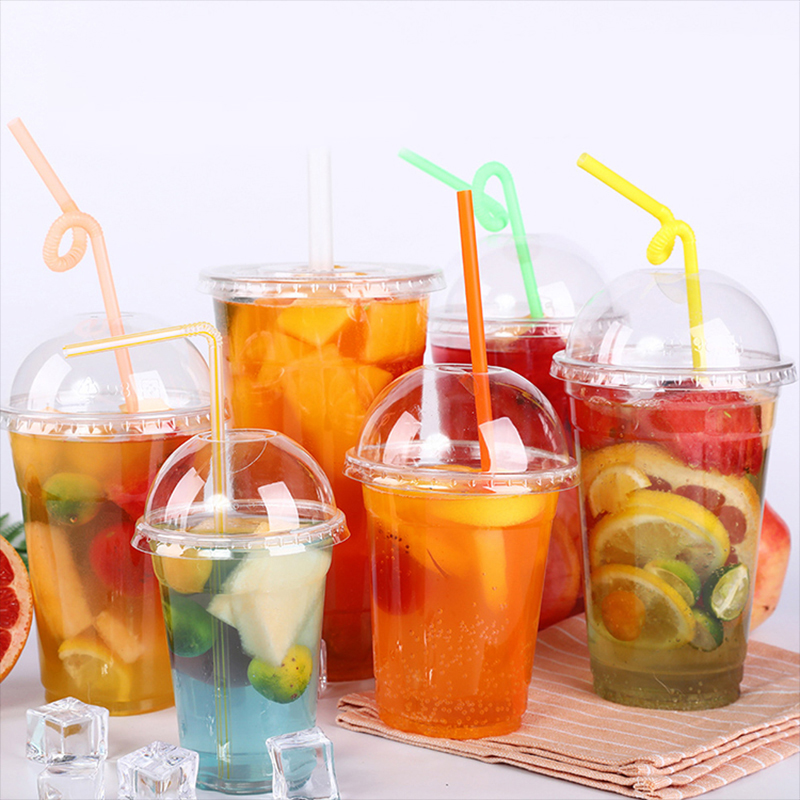
We run a busy beachside café, will PLA cups break down naturally if some customers accidentally leave them behind on the sand?
No, that is a very risky assumption. PLA will not biodegrade in open beach conditions, seawater or regular ambient outdoor temperatures. You still need to run proper waste sorting stations at your venue, and remind your team to clear all discarded cups every closing shift, no exceptions.
Why Choose Hydebiopack
Hydebiopack is an experienced eco friendly food packaging supplier focused exclusively on high-performance PLA single-use tableware. We offer full custom disposable food packaging solutions, including custom printed PLA cups, heat-resistant PLA food containers and matching compostable cutlery sets tailored for cafes, catering businesses and retail brands. Every batch is produced with full traceability, supported by complete FCM migration test documentation and compostability certification for global markets. We handle both small trial wholesale orders and large-scale recurring supply contracts, with dedicated support to help you meet local and international sustainable packaging regulations.