
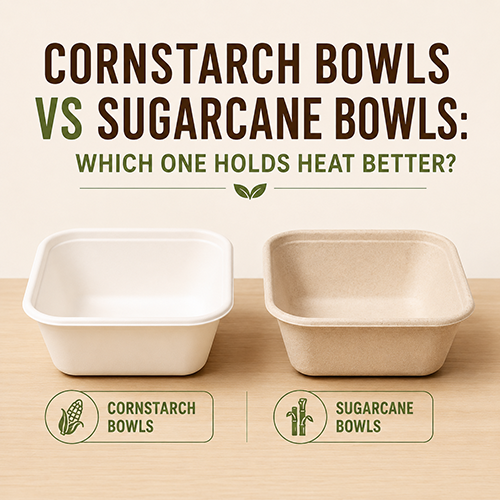
Cornstarch Bowls and Sugarcane Bowls have become popular plastic-free choices, but they behave quite differently under heat. After testing and feedback from many partners, we at hydebiopack.com see clear strengths in each.
What Makes These Materials Different
- Cornstarch Bowls are produced mainly from corn starch turned into PLA material.
- Sugarcane Bowls come from bagasse, the leftover fiber after sugarcane processing.
Real-World Heat Performance
Here’s where the biggest contrast shows up. Sugarcane Bowls do an excellent job holding heat. Their thick fiber structure acts like built-in insulation, keeping soups and broths warm while the bowl stays firm even at high temperatures around 100°C or more.
Cornstarch Bowls, on the other hand, manage warm foods well for shorter times. They suit quick-serve situations or meals that cool down fairly fast. Once temperatures push higher for extended periods, these bowls can lose rigidity. Many operators use them successfully but avoid filling them with boiling liquids right before long deliveries.
Other Important Factors in Daily Use
- Strength matters beyond just temperature. Sugarcane Bowls resist oil and moisture effectively, making them great for creamy curries, oily ramen, or chili.
- Cornstarch Bowls win points for their sleek appearance and lighter weight, which helps lower shipping expenses.
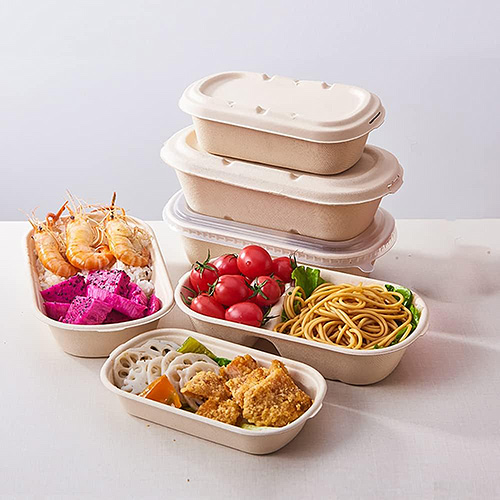
At hydebiopack.com we carry a full range of Cornstarch Bowls and Sugarcane Bowls in different sizes, with or without secure lids.