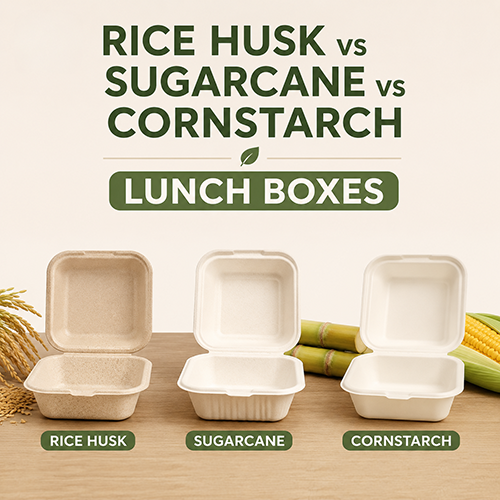
As more companies look for lunch packaging options that are kinder to the environment, rice husk, sugarcane bagasse, and cornstarch keep coming up as top alternatives. Each material has its own strengths depending on how you plan to use it.
Why Rice Husk Lunch Boxes Make Sense
Rice Husk Lunch Boxes are created from the protective outer layer of rice grains, a byproduct that usually gets discarded after harvesting. This approach avoids competing with food resources while producing containers that hold up well.
These boxes resist high temperatures effectively, letting you safely warm up meals or pack spicy hot dishes without any deformation. Availability can shift with seasonal rice production too. Even with these points, Rice Husk Lunch Boxes deliver strong everyday performance and real environmental benefits.
Sugarcane Bagasse Lunch Boxes – Tough and Practical
Sugarcane Lunch Boxes are made from the fibrous residue left after juice is extracted from sugar cane.
These stand out for excellent heat resistance – they manage temperatures well above what most meals need. Great for oily stir-fries or saucy pastas, they hold shape even when stacked in busy takeaway spots. The smooth-yet-natural finish photographs nicely for brands too.
They do cost a little more in some batches, and a few versions use light coatings for extra moisture protection, though fully natural ones exist. If your operation deals with hot foods all day, Sugarcane Lunch Boxes prove reliable and compost fast once tossed.
Cornstarch Lunch Boxes – The Familiar Option
Cornstarch Lunch Boxes, often made with PLA blends, closely resemble conventional plastic in appearance. This makes the transition easier for many end users.
They stay light in weight, fit together cleanly when stored, and accept clear printing for logos and designs. For visual appeal and easy high-volume orders, Cornstarch Lunch Boxes deliver convenience.
Side-by-Side: Which One Fits You Best?
Comparing Rice Husk Lunch Boxes, Sugarcane Lunch Boxes, and Cornstarch Lunch Boxes reveals practical differences worth considering. All beat single-use plastic by breaking down naturally without microplastics. Rice husk feels especially smart because it uses true agricultural waste that might otherwise burn. Sugarcane taps existing sugar production cycles. Cornstarch scales easily but sometimes lags in full eco-performance.
Real talk: many of our clients mix them. Hot food vendors pick rice husk or sugarcane more often, while cafes with fresh cold items go cornstarch.
Making the Smart Switch for Your Business
The right eco-friendly lunch boxes depend on your menu, customer expectations, and priorities around heat, looks, and cost.
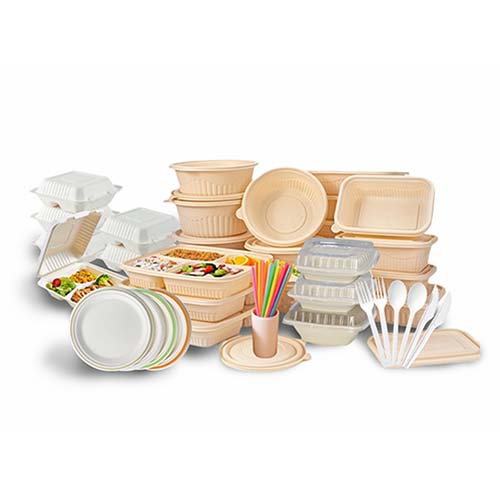
At Hyde Bio Pack we produce all these biodegradable options with food safety top of mind. We can customize sizes, compartments, colors, and logos to match your brand perfectly.
Need something special? We offer fully customizable Rice Husk Lunch Boxes, Sugarcane Lunch Boxes, and Cornstarch Lunch Boxes. Just reach out – whether you want small test runs or large wholesale volumes, our team is ready to create packaging that works for you and the planet. Contact us today to get started.