
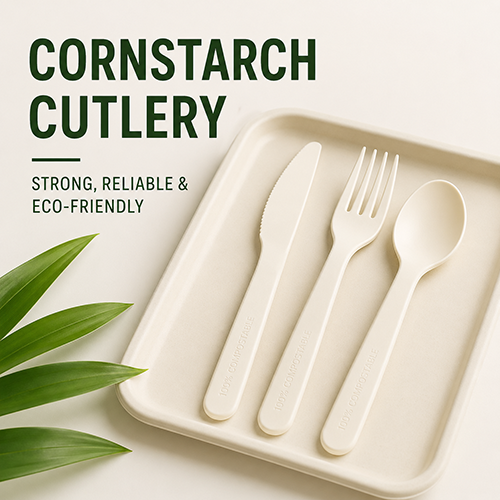
Cornstarch knives, cornstarch forks, and cornstarch spoons have gained traction as everyday solutions made from renewable plant resources. At Hydebiopack, we produce these plant-based pieces to help businesses shift away from conventional plastic without major headaches during busy hours.
What Goes Into Making Cornstarch-Based Cutlery
Cornstarch cutlery begins with starch harvested from corn crops, processed into a bioplastic blend suitable for molding into knives, forks, and spoons. Manufacturers mix in natural additives to improve how the material holds together.
Testing the Breaking Point of Cornstarch Knives
People often worry whether cornstarch knives will snap when cutting through a steak or slicing a sandwich. In real kitchen tests and daily operations, cornstarch knives manage lighter cutting jobs like portioning cakes, vegetables, or fish without much trouble.
Factors That Affect How Long Cornstarch Cutlery Lasts
Water and grease sensitivity stands out as a key influence since the starch base can gradually absorb liquids during longer contact. Extended exposure to oily dishes or very saucy meals may leave the surface less firm, which is why faster service often delivers the most consistent experience. Temperature limits typically allow comfortable use up to around 60-70°C, after which the material starts to lose some rigidity.
How Cornstarch Cutlery Stacks Up Against Alternatives
Standard plastic cutlery delivers impressive toughness and stands up well to higher heat, yet it leaves behind waste that sticks around far too long. Bagasse and wooden versions add an earthy touch but can differ noticeably from one batch to the next. Crystallized plant-based options such as CPLA push the boundaries further with better heat handling and stronger resistance in tougher situations. Cornstarch knives, cornstarch forks, and cornstarch spoons strike a useful middle ground for plenty of operators because they remain more budget-friendly than upgraded crystallized types while still offering reliable day-to-day service.
Smart Ways to Get the Most from Your Cornstarch Utensils
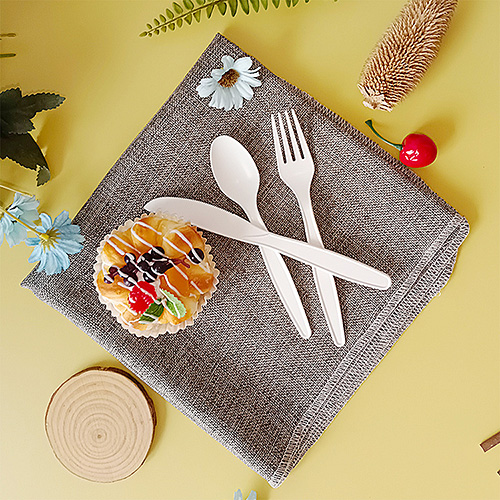
Keep cornstarch cutlery away from damp storage spaces and direct humidity to prevent early softening. Pair each piece with suitable foods—lighter or room-temperature options bring out their best qualities, while dense or steaming items might benefit from alternatives with greater backbone. Teach team members to use steady, natural pressure instead of pushing hard, and most guests hardly spot any variation from regular plastic during relaxed meals. We builds its cornstarch line by keeping these common usage patterns in focus, creating a flow that feels effortless from the moment the package opens until the responsible end-of-life step.
Why Our Cornstarch Cutlery Makes Sense for Your Business
We focuses on producing cornstarch knives, cornstarch forks, and cornstarch spoons that combine decent strength with clear environmental gains. The lineup includes individual pieces and convenient matched sets ready for bulk supply.
Overall, cornstarch knives, forks, and spoons rarely break easily when used as intended and sourced from quality producers. They provide a balanced option for operators who want functionality today and fewer long-term environmental consequences tomorrow. We keeps improving the blend and molding process to meet shifting demands in the foodservice world.
Reach out today to discuss your custom cornstarch cutlery needs—we’re here to develop practical, planet-friendly solutions that work for your business.