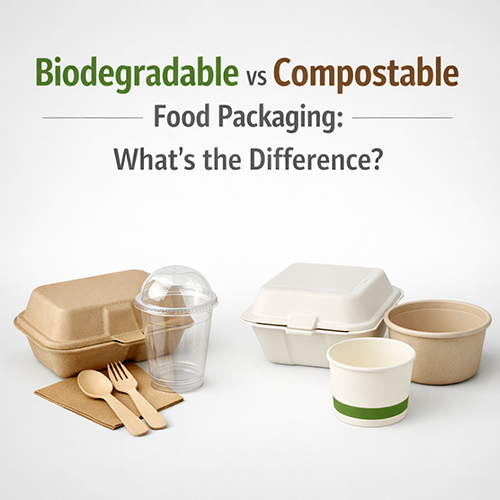
Food businesses get bombarded with “green” labels, and the words biodegradable food packaging and compostable food packaging get thrown around like they’re the same thing. They’re not. Figuring out the real difference between biodegradable food packaging and compostable food packaging can save you from greenwashing headaches and actually help your operation do something useful with all that daily waste.
What Biodegradable Food Packaging Really Means
Biodegradable food packaging basically means stuff that microbes — bacteria, fungi, whatever — can eventually chew up and break apart. It might happen in your backyard dirt, a river, or even a landfill.
But here’s the catch: there’s no clock on it. No one says it has to finish in six months or under certain conditions. Some biodegradable food packaging starts cracking after a few months, others drag on for years and end up as annoying little fragments hanging around in the environment.
The Clear Edge of Compostable Food Packaging
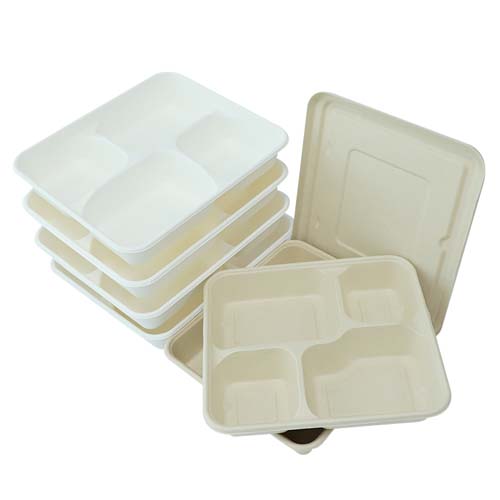
Compostable food packaging plays by much tougher rules. It has to turn completely into good, dark soil inside a real composting system — home bucket or big industrial one. Certified compostable food packaging usually needs to get the job done in 90 to 180 days when the heat, moisture and air are right. It only gets the label after serious lab tests (think ASTM or EN standards) prove it breaks down fully and leaves nothing toxic behind.
That’s why a lot of operators reach for compostable food packaging when they want used containers to actually help the soil instead of just disappearing slowly or making a mess.
Side-by-Side: Biodegradable Food Packaging vs Compostable Food Packaging
Quick reality check: anything that’s compostable food packaging is also biodegradable food packaging, but most biodegradable food packaging never makes the cut for compostable. The gaps are pretty obvious once you look — speed, required conditions, and what’s left at the end.
- Biodegradable food packaging can fall apart unevenly almost anywhere and sometimes spits out micro pieces that don’t go away.
- Compostable food packaging needs the right setup but gives you a clean finish with actual soil benefit and no nasty leftovers.
When restaurants stack biodegradable vs compostable food packaging against each other for real use, the compostable side usually feels more reliable and lines up better with today’s waste programs.
Ready to move to something better? Hydebiopack biodegradable food packaging and compostable food packaging are fully customizable to whatever your business needs. Unique designs, big orders, or special features — just come to hydebiopack.com and we’ll work with you to build custom eco-friendly food packaging that actually works in real life.