
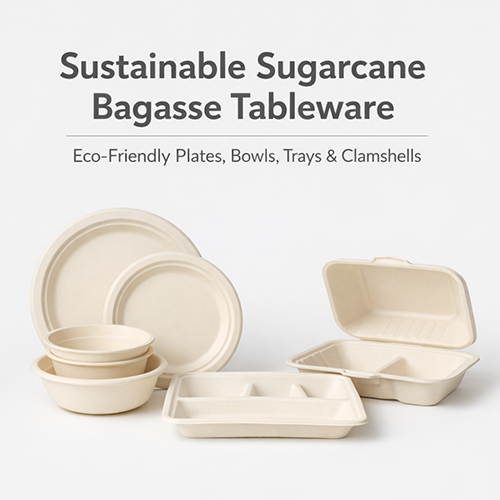
For owners deciding on greener supplies for operations or big events, let’s break down the standout features of sugarcane bagasse tableware and the situations where it delivers real value.
Key Strengths That Buyers Experience Firsthand
Sugarcane bagasse tableware uses an industrial leftover, avoiding fresh timber harvest or extra land cultivation. This approach sidesteps the heavy fossil fuel input and permanent pollution tied to conventional foam or petroleum plastics.
Forget the quick breakdown you get with basic paper under juicy stir-fries or drippy tacos; these hold firm. They offer enough stiffness to support loaded portions or handheld eating without buckling, but remain easy to carry and store in high volumes.
Hot soups, fresh-from-the-grill items, or frozen prep packs all work without distortion, unlike melting styrofoam or softening alternatives. On the end-of-life side, proper composting turns them into nutrient-rich matter in roughly 60–180 days, depending on conditions—far better than indefinite accumulation.
Everyday Scenarios Where It Excels
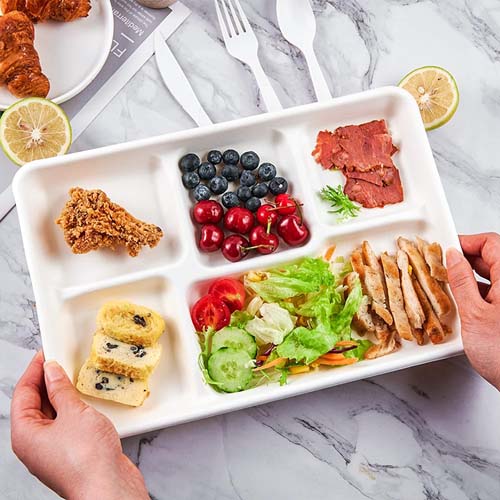
Mobile kitchens and delivery outfits depend on sugarcane bagasse tableware for secure takeout packaging. Multi-section trays and secure-lid boxes keep components divided and mess-free over rough transport, cutting down on spills from curries, noodles, or loaded sandwiches. Vendors often note sharper drops in customer feedback about damaged goods versus earlier foam reliance.
Fast-casual chains, institutional dining, and campus spots incorporate plates, cutlery, and matching lids. The subtle fibrous feel comes across more upscale than glossy synthetics, and on-site warming capability streamlines workflows. Beverage spots pair it with insulated cups for both warm lattes and chilled smoothies.
Personal events like backyard cookouts or family reunions see folks stocking up too—versatile enough for chilled sides through to barbecued mains, with easy disposal that feels responsible.
Straightforward Comparisons to Familiar Choices
Against standard plastics: sugarcane bagasse tableware dodges persistent breakdown products and resource-intensive origins. It rivals toughness for typical service while shifting toward soil regeneration over environmental buildup.
Compared with expanded polystyrene (foam): No fragile flaking, no questionable emissions under heat, and a cleaner appearance overall, plus genuine end-of-use breakdown.
Traditional paper variants frequently rely on barriers for liquid hold, complicating true composting or recycling. Bagasse tackles greasy or moist loads more consistently from the start, reducing mid-use failures.
Overall, it strikes a practical middle ground—capable like synthetics, kinder to the planet than most alternatives.
Ready to bring sugarcane bagasse tableware into your lineup? At Hydebiopack, we produce high-grade sugarcane bagasse plates, sugarcane bagasse bowls, sugarcane bagasse trays, sugarcane bagasse clamshells, and more—all customizable in size, shape, compartment style, or with your logo. Bulk wholesale or branded runs, we’ve got flexible options to match your volume and specs. Drop us a line if you’re exploring sustainable switches—we’ll walk you through samples and tailoring to make it work seamlessly for your setup.