
Problem Background
Over the past five years, foodservice operators, retail chains and bulk buyers have been steadily moving away from single-use plastic and expanded polystyrene containers, and sugarcane packaging has emerged as one of the fastest growing alternatives on the global market. Unlike many niche eco-materials that only work for specific use cases, sugarcane bagasse packaging fits almost every common foodservice scenario, from hot takeout meals to cold deli items, and it addresses both consumer sustainability demands and new regulatory restrictions on traditional plastics. For B2B buyers searching for reliable wholesale food packaging that balances performance, cost and compliance, this shift is no longer a trend, it is becoming a baseline requirement for doing business across most regions.
Core Analysis
Sugarcane packaging is made from bagasse, the fibrous agricultural residue left after sugarcane stalks are crushed to extract juice. Instead of burning this leftover material in fields, which would otherwise release large amounts of particulate pollution, manufacturers upcycle it into molded fiber packaging that requires almost no extra virgin timber or non-renewable feedstock. This creates a closed resource loop that fits circular economy principles far better than most competing materials.
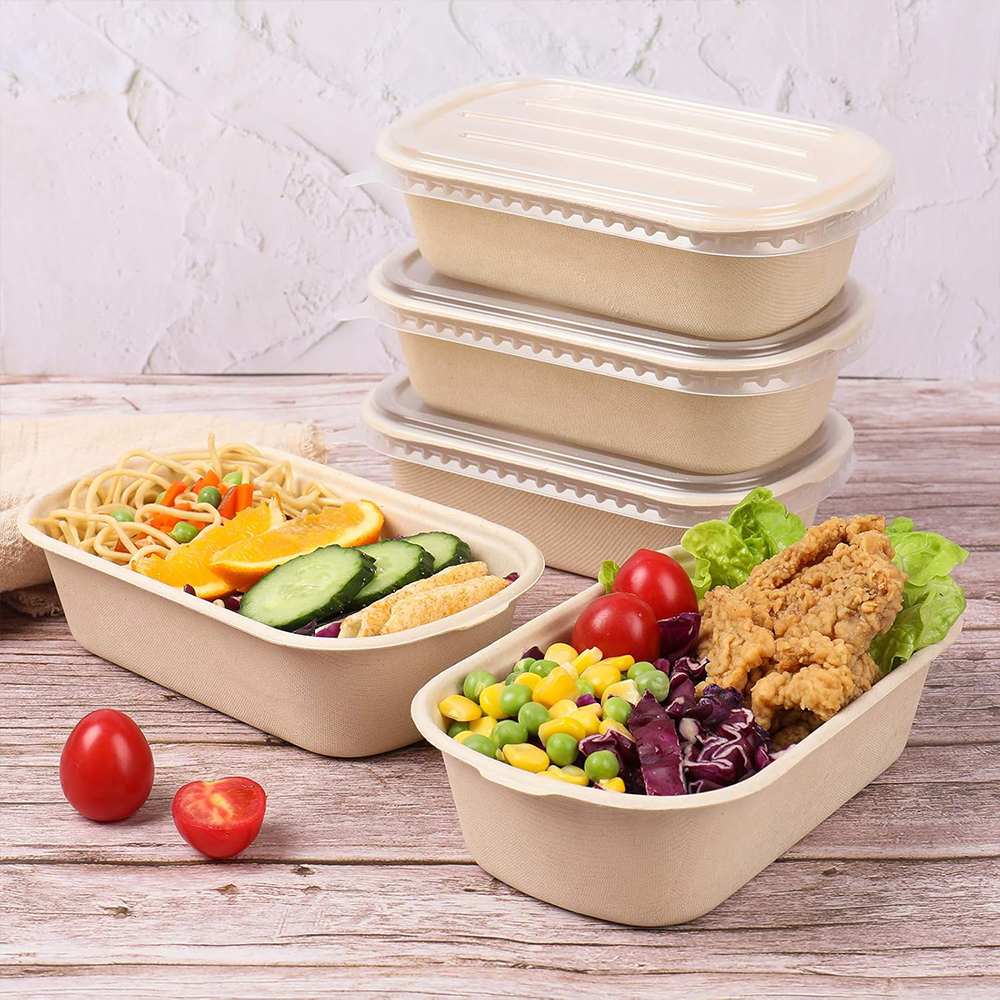
The core advantage that drives its global adoption is that it does not force end users to choose between sustainability and functionality. Most biodegradable alternatives fail at least one key performance test: uncoated paper leaks through with greasy hot food, basic PLA containers warp under high heat, and many plant-based options cannot handle freezer or microwave use. Standard sugarcane bagasse clamshell boxes, by contrast, hold up to temperatures from minus 20 degrees Celsius up to 120 degrees Celsius, making them safe for freezers, microwaves and conventional ovens without deformation. They also offer natural water and grease resistance that works for everything from saucy pasta to fried snacks, no extra plastic lining required for most standard foodservice applications.
The following direct performance comparison helps B2B buyers quickly see how sugarcane packaging stacks up against common alternatives:
| Material Type | Heat Resistance | Grease Resistance | Commercial Compostable | BPA and Phthalate Free |
| Sugarcane Bagasse | Up to 120 degrees Celsius | Excellent | Yes | Yes |
| Expanded Polystyrene | Up to 80 degrees Celsius | Poor | No | No |
| Uncoated Paper | Up to 90 degrees Celsius | Moderate | Partially | Varies by coating |
| Basic PLA | Up to 60 degrees Celsius | Moderate | Only under industrial conditions | Yes |
Procurement Advice
For B2B buyers sourcing custom disposable food packaging, there are three practical steps to reduce risk when adding sugarcane products to your inventory.
- First, always request full compliance documentation including DIN EN 13432 and FDA 21 CFR 176.170 test reports before placing a large wholesale order, not just a general “eco friendly” marketing claim.
- Second, run a 2 week real world test with your most common menu items: check for leaks after 30 minutes of holding hot oily food, test stack stability during delivery, and confirm performance after 24 hours in a freezer.
- Third, work with a compostable food containers manufacturer that keeps consistent stock of standard SKUs including sugarcane bowls, sugarcane plates, sugarcane clamshell boxes and sugarcane portion cups, so you do not face supply gaps during peak seasonal demand.
FAQ
- Can sugarcane packaging go directly from the freezer to the microwave without breaking or melting?
Yes, certified food grade sugarcane bagasse products are engineered to handle rapid temperature shifts from minus 20 degrees Celsius up to 120 degrees Celsius, so they work safely in both standard freezers and commercial microwaves without deformation or chemical leaching. - Is sugarcane packaging more expensive than standard plastic takeout containers for bulk orders?
At large wholesale volumes over 50000 units, the price gap between standard sugarcane clamshell boxes and comparable plastic containers has shrunk to less than 15 percent in most global markets, and many buyers find the small premium is offset by avoided regulatory fines and improved customer brand perception. - Do I need special separate waste streams for sugarcane packaging at my foodservice location?
No, certified products that meet DIN EN 13432 can go into standard commercial compost bins, and they are also safe for general waste streams because they break down completely in 90 to 180 days, leaving no persistent microplastics behind.
Why Choose Hydebiopack
As an experienced eco friendly food packaging supplier, Hydebiopack.com focuses exclusively on high performance sugarcane bagasse disposable tableware and food packaging for global B2B clients.
If you are looking to switch your current takeout or foodservice packaging to verified sugarcane bagasse products, you can browse our full product catalog on Hydebiopack.com, submit a custom request form, or reach out directly to our sales team to request free sample packs and a detailed bulk pricing quote.
Conclusion
Sugarcane packaging works because it doesn’t ask operators to completely rewrite their entire workflow or jack up their menu prices just to hit a sustainability target. For any B2B buyer that partners with a real, reliable compostable food containers manufacturer that delivers consistent quality and proper certifications, it’s the most low risk, high reward swap you can make right now to stay ahead of new plastic bans, keep your restaurant clients happy, and avoid the constant supply headaches that come with flimsy, untested alternative materials.

