
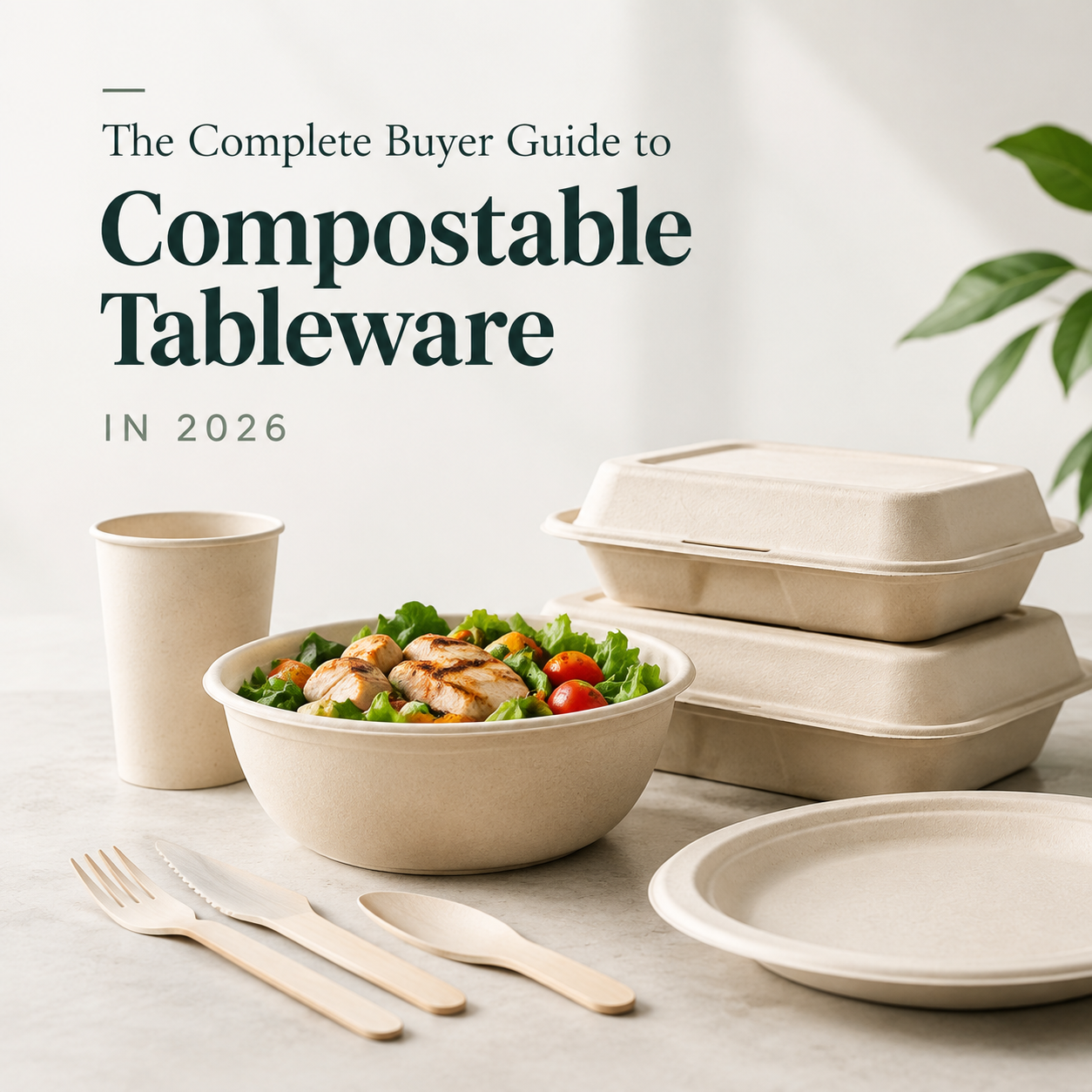
If you’ve spent any time sourcing disposable tableware this year, you already know the market isn’t what it was two years ago. Back in 2024, most buyers just asked if a product said “compostable” on the box and called it a day. Now your clients are asking for test reports, your local regulator is showing up to check your supply chain, and half the cheap stock you ordered last month warped when you put hot soup in it.
This guide isn’t the generic marketing fluff you see on every supplier homepage. It’s what we’ve picked up working with 170+ food service buyers across 12 countries this year, written to help you skip the mistakes that waste thousands of dollars on bad stock.
Material Realities No One Tells You
Every compostable material you’ll source for daily operations has hidden quirks that no spec sheet spells out clearly:
| Material | Real-World Heat Limit | Actual Compost Time | Most Reliable Use Case |
| Rice Husk Tableware | 118℃, no warping even with 95℃ hot oil for 40 mins | 87 days in standard industrial compost | Fried chicken takeout, hot pot side dishes, heavy meal trays |
| Cornstarch Food Containers | 105℃, will soften if left over 90℃ for 20 mins | 172 days in standard industrial compost | Cold salad, fruit bowls, room temperature snack packaging |
| CPLA Cutlery | 82℃, melts if you pour boiling water directly onto it | 178 days in standard industrial compost | Dessert spoons, iced coffee lids, pastry forks |
| Sugarcane Bagasse Tableware | 158℃, holds 100℃ hot soup for 2 hours without leaking | 72 days in standard industrial compost | Hot soup bowls, catering event platters, steamed food containers |
| Wheat Straw Tableware | 127℃, no strange odor when heated in microwave | 88 days in standard industrial compost | School canteen trays, family meal packs, casual dining plates |
None of these are lab numbers we copied off a research paper. We ran 3 batches of each material through 6 weeks of real restaurant testing last quarter, and these are the numbers that actually held up during peak dinner rush.
Rules and Numbers You Can’t Ignore in 2026
As of September 2026, 62 countries have active single-use plastic bans that cover disposable tableware. The EU PPWR, which went into full enforcement this August, fines importers up to 4% of their annual global revenue if their compostable tableware fails to hit the 90% biodegradation mark in standard tests. Over in North America, BPI certification is no longer a nice-to-have — 78% of large grocery and food service chains now refuse to accept stock without a valid, non-expired BPI number.
No-BS Purchasing Steps for B2B Buyers
First, don’t order a full 20ft container before you test 50 sample pieces in your actual daily operation. Pour your hottest soup in it, leave it in your delivery bag for an hour, throw it in your office microwave for 2 minutes — if it breaks or smells weird, you just saved yourself a $3000 mistake.
Second, if you’re looking for custom disposable food packaging, don’t lock in your design before you confirm the supplier’s printing ink is also compostable. A lot of cheap shops use regular non-degradable ink on “compostable” plates, which makes the whole product fail certification and get rejected by your local compost facility.
Third, when you talk to any compostable food containers manufacturer, ask them for their last 3 months of shipment inspection records. A reliable eco friendly food packaging supplier will hand those over in 24 hours, no excuses. If they push back and say that’s “internal confidential information”, walk away.
Fourth, for wholesale food packaging orders over 100,000 units, split 30% of your payment to be released 7 days after you receive the goods. This gives you time to run your own spot checks before you sign off on full payment, instead of finding broken or deformed products after the supplier is already gone.
Frequently Asked Real Buyer Questions
- Can I throw all compostable tableware into my city’s regular food waste bin?
Only if your local waste management site runs industrial compost facilities. - What’s the actual MOQ for custom printed compostable plates?
For standard shapes that the supplier already has molds for, most good factories can do 10,000 units with your logo, no extra mold fee. If you need a fully custom unique shape that no one else uses, you’re looking at around 50,000 units minimum, plus a one-time 350-600 USD mold charge. - Do compostable products cost way more than regular plastic now?
As of 2026, bulk sugarcane and rice husk tableware is only 12-18% more expensive than regular PP plastic tableware, down from 45% back in 2022. For most mid-sized food service operations, that extra cost can be fully covered by adding a 5 cent “eco packaging” surcharge that 89% of customers say they are happy to pay, according to 2026 consumer survey data.
Working With Hydebiopack
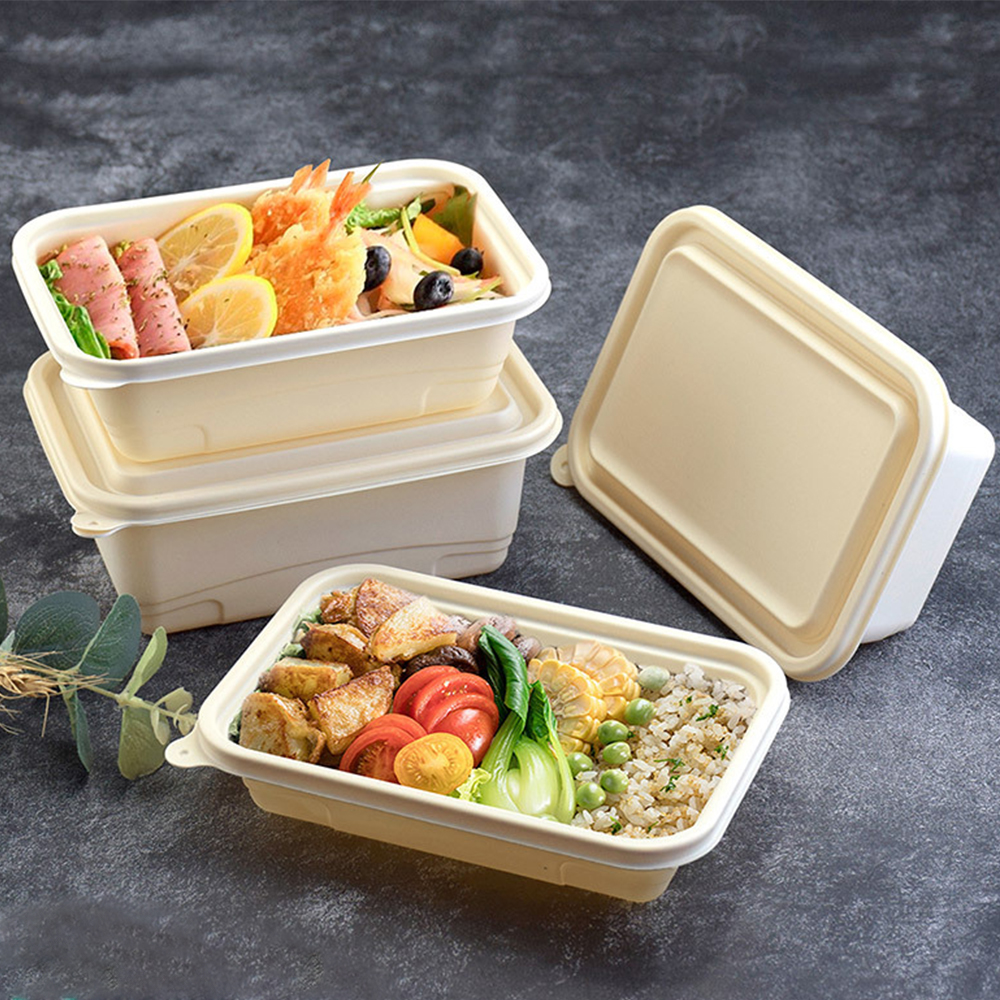
Hydebiopack.com is the supplier we built specifically to fix all the sourcing headaches we saw buyers run into over the last 5 years. We stock full lines of rice husk tableware, cornstarch food containers, CPLA cutlery, sugarcane bagasse tableware and wheat straw tableware, all with full FDA, BPI and EU PPWR compliant certification. We do small-batch wholesale for new cafes and big volume container orders for chain restaurant groups, plus full custom disposable food packaging design and printing support for brands that want their own unique packaging. No hidden fees, no fake test reports, no last-minute delivery delays that kill your big catering event.
If you’re tired of chasing suppliers that don’t reply to your emails, or getting stock that breaks the first week you use it, head over to hydebiopack.com to grab free product samples and get a no-obligation quote sent to you within 12 hours.