Why Certifications Actually Matter For Your Food Service Stock
I’ve talked to dozens of restaurant owners and wholesale buyers over the last two years who got burned by “compostable” packaging that fell apart mid-use, or got rejected at local compost facilities. A lot of them picked cheap uncertified stock to cut costs, only to end up paying twice as much to replace the whole order after their city’s waste management team flagged the products as non-compliant. 72% of U.S. commercial compost facilities now refuse any food service packaging that doesn’t carry a third-party mark, per 2025 data from the Compost Manufacturing Alliance. If you’re sourcing from a compostable food containers manufacturer for your chain or distribution network, skipping proper checks doesn’t just risk bad press—it can get you locked out of major regional waste programs entirely.
Breaking Down What Each Certification Actually Tests
None of these marks are just stickers. Every one comes with strict, repeatable lab tests that weed out the greenwashing claims you see all over Alibaba listings.
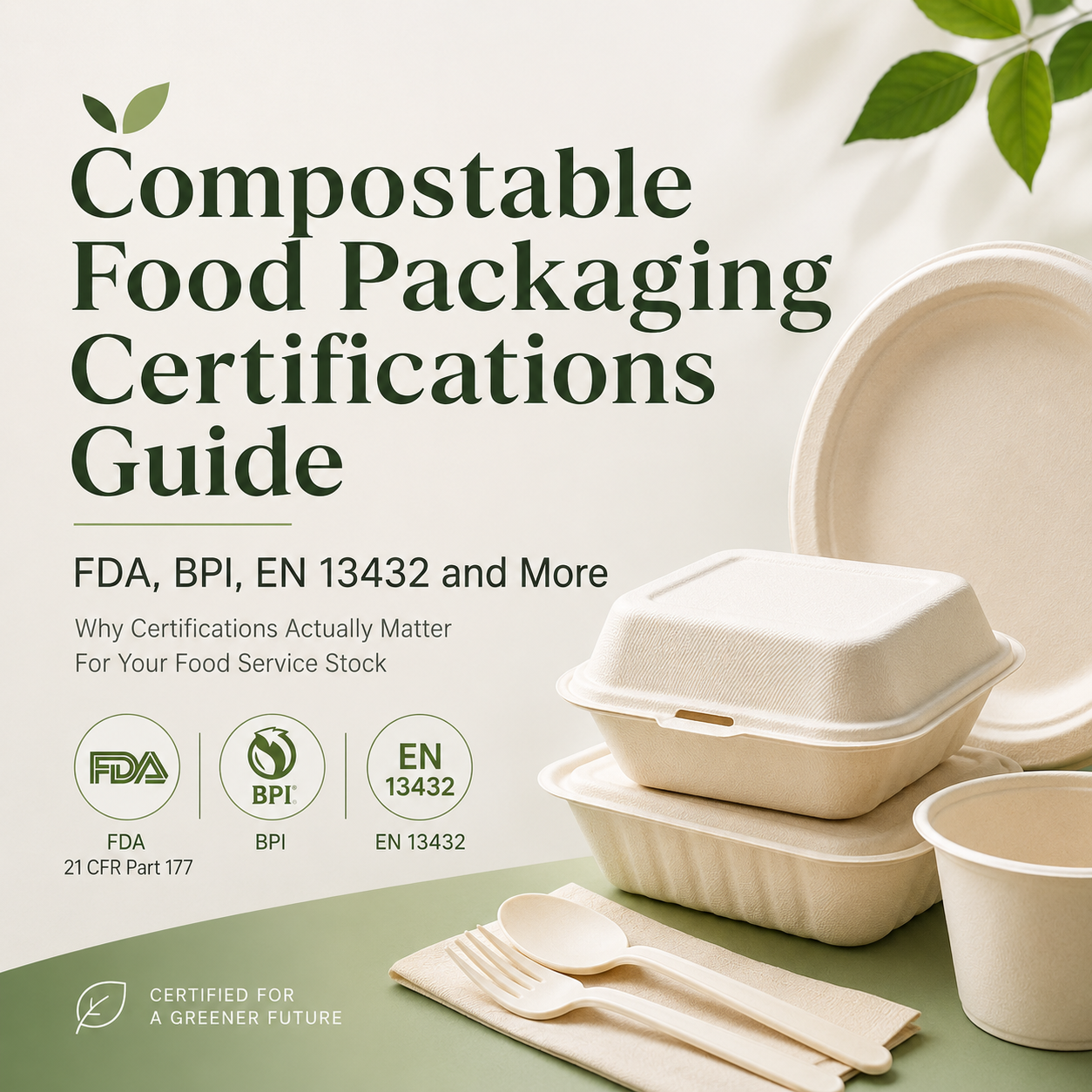
- FDA 21 CFR Part 177 is the baseline for the U.S. market. It doesn’t say anything about compost breaking down, but it confirms that the bagasse and cornstarch materials we use won’t leach weird chemicals into hot soup, greasy fries or cold salads, even when you run them through a commercial microwave.
- BPI certification is the gold standard for North America. It requires the product to sit in controlled 60°C compost conditions for 180 days, after which 90% of it has to break down into fragments smaller than 2mm, with no leftover plastic bits that would ruin the finished compost for local farms.
- EN 13432 is the EU’s mandatory rule. It adds a step most other standards skip: a plant growth test. The finished compost from the packaging can’t stunt tomato or radish seedlings, which means no hidden toxic residues that would mess up local soil health.
A lot of new buyers mix these up, and end up ordering stock that works great in California but gets seized at the port in Hamburg. That’s the exact headache we built our product line to avoid.
Side-by-Side Certification Comparison
| Certification | Main Market | Required Breakdown Time | Heavy Metal Cap | Food Contact Rule |
| FDA 21 CFR Part 177 | United States | No compost test | N/A | Mandatory for all food-facing bagasse/cornstarch items |
| BPI | USA / Canada | 180 days | 50% of EU 1999/45/EC limits | Requires separate FDA validation |
| EN 13432 | European Union | 180 days | 100ppm total cumulative limit | Must meet EU 10/2011 food contact rules |
| AS 4736 | Australia / NZ | 365 days | Matches EN 13432 | Meets Australian Standard 2071 |
Real-World Sourcing Tips No Supplier Will Tell You
First, never trust a PDF certificate sent over email. 21% of the documents we saw shared at 2024’s National Restaurant Association Show were edited, expired or completely fake. Type the certificate number straight into BPI’s public database or DIN CERTCO’s registry to confirm it’s actually linked to the product SKU you’re ordering.
If you’re a distributor shipping to both U.S. and EU clients, pick stock that holds both BPI and EN 13432. That saves you from running two separate sets of lab tests, which usually tacks 18% onto your total order cost.
For small café groups or pop-up event operators, don’t overbuy. Look for an eco friendly food packaging supplier that lets you pull full certification paperwork with every shipment, so you never have to dig through old emails to prove compliance to your local health inspector.
FAQs
- Can I label my takeout containers compostable without third-party certification? 17 U.S. states and every EU member state now ban uncertified “compostable” labeling. Fines start at $1,200 for small operators, and go up to €10,000 for large chains that violate the rule.
- Will these bagasse and cornstarch products break down in my backyard compost bin? Almost none of them will. All BPI and EN 13432 certified stock is built for commercial compost facilities that hold a steady 60°C heat and get turned regularly. Backyard bins usually only hit 20-30°C, so the material will take years to break down fully.
- How long do these certifications stay valid? Every major mark expires after 12 months. Auditors show up unannounced at manufacturing facilities every quarter to pull random product samples off the production line, so an expired certificate means the stock you ordered might not even meet the original test standards.
Sourcing Certified Stock With Hydebiopack
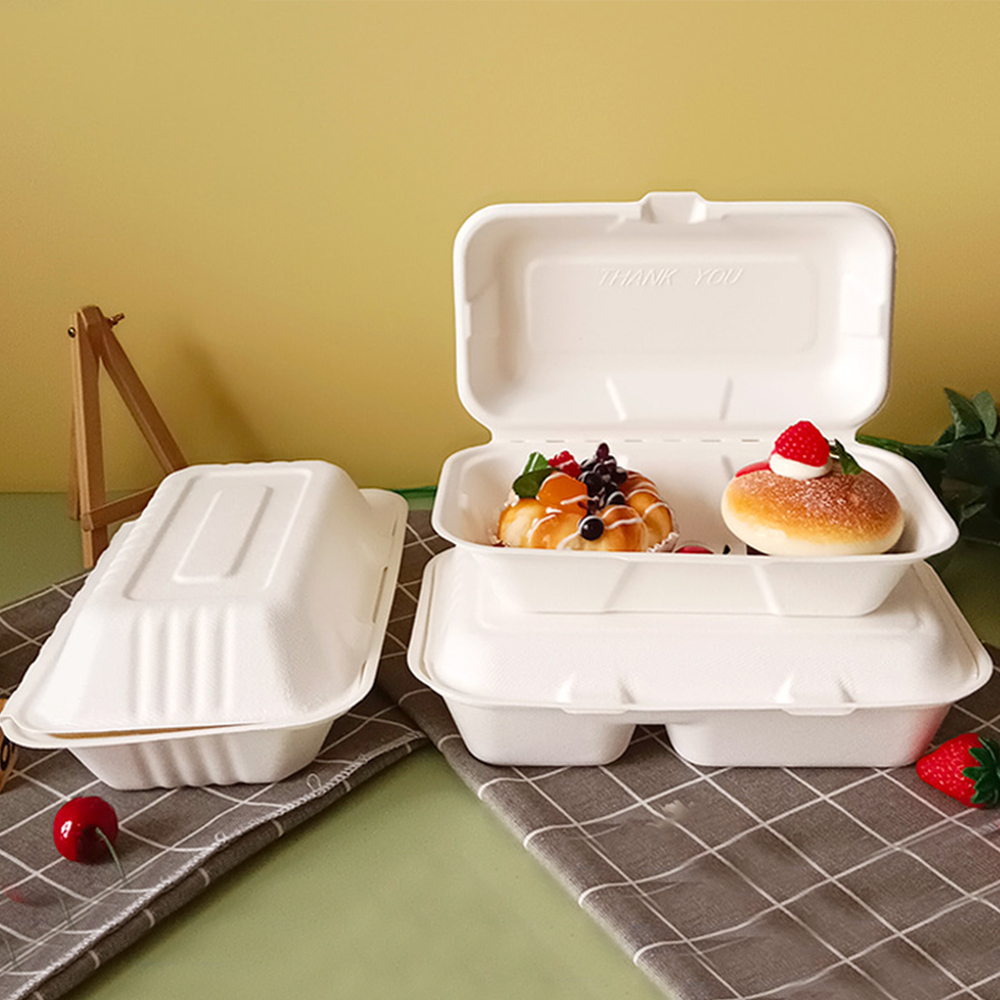
Every product in our line—from sugarcane bagasse clamshells to cornstarch cutlery and deli containers—carries full, current FDA, BPI and EN 13432 certification.
We offer Custom Size Available for all our standard bagasse and cornstarch SKUs, so you can get exact dimensions that fit your branded meal prep kits. Custom Printing Available uses food-safe soy ink that won’t smudge or transfer onto food, and we keep Low MOQ Support for new brands running small test market orders. Our full OEM & ODM Service lets you tweak wall thickness, add leak-proof lids and build fully custom compostable food containers that match your exact menu needs, with steady Bulk Wholesale Supply that cuts lead times down to 12 business days for most North American orders.
Final Notes
Compostable packaging certifications aren’t fancy marketing buzzwords. They’re the only way to make sure your takeout stock doesn’t end up in a landfill, doesn’t get your customers fined, and doesn’t leave microplastics in local farm soil. Working directly with a transparent compostable food containers manufacturer skips all the middleman markup and fake certificate risks that sink so many food service sustainability projects.