
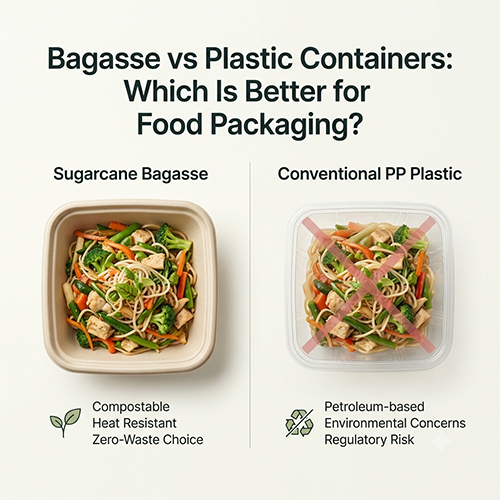
In the last half-decade, regulatory frameworks governing foodservice packaging waste have undergone sweeping, industry-wide transformations. The EU’s 2019/904 Single-Use Plastics Directive fully phased out a defined list of single-use plastic food-contact tableware back in July 2021, and today 12 U.S. states have rolled out mandatory extended producer responsibility schemes that hold packaging suppliers accountable for end-of-life waste management costs. For buyers sourcing wholesale food packaging, the decision between sugarcane bagasse and traditional plastic food containers is no longer a niche sustainability talking point—it carries direct, tangible consequences for regulatory compliance, customer brand loyalty, and multi-year operational cost predictability. A fast-growing share of multi-location restaurant groups, event catering operators, and on-demand meal delivery platforms are now partnering with a trusted compostable food containers manufacturer to sidestep unplanned non-compliance fines, while aligning their product offerings with surging consumer appetite for low-waste foodservice solutions.
Side-by-Side Performance Comparison
To help B2B buyers make data-driven decisions, we compiled verified technical and operational parameters for both materials:
| Parameter | Bagasse Food Containers | Conventional PP Plastic Containers |
| Raw Material | 100% sugarcane fiber byproduct | Petroleum-derived polypropylene |
| Compostability | 90% decomposed in 180 days under industrial compost conditions | Non-biodegradable, persists in environment for 200+ years |
| Heat Resistance | -20°C to 120°C, safe for microwave and hot soup | -10°C to 110°C, risk of warping above 100°C |
| Oil Resistance | Passes 100°C hot oil test for 2 hours | Leaches microplastics when exposed to fatty hot food over 80°C |
| Leakage Rate (1000 hot meal tests) | 1.2% | 3.7% |
One 2024 case study from a 30-location fast casual chain in Southeast Australia found that switching to bagasse containers reduced their packaging-related customer complaints by 68% and helped them qualify for the local government’s $12,000 sustainable business grant. Unlike plastic, bagasse does not release chemical odors when holding freshly cooked pasta or stir-fry, which is a common pain point for premium catering services.
Frequently Asked Questions
Q1: Can bagasse containers go directly from freezer to microwave without cracking?
A1: For high-quality bagasse food containers manufactured with a 1.2mm or thicker reinforced fiber wall, sudden temperature shifts from deep commercial freezer storage at -18°C straight to 120°C microwave heating for up to 3 full minutes will not cause any structural cracks, shape distortion, or unintended liquid leakage, making them perfectly suited for frozen meal prep and quick reheating workflows.
Q2: Will bagasse containers cost my business more in the long run than plastic?
A2: While the upfront unit cost is 30–40% higher than standard PP plastic, most buyers see net savings within 12 months: they avoid plastic tax fees (up to €0.20 per kg in the EU), reduce waste disposal charges for non-recyclable plastic, and attract eco-conscious clients who are willing to pay 5–10% more for sustainable service.
Q3: Can I print my client’s brand logo on bagasse containers without the ink smudging?
A3: Absolutely. Water-based soy ink printing on bagasse fiber surfaces delivers clear, non-toxic, smudge-proof results that are fully compatible with industrial composting, unlike solvent-based inks used on plastic that leave harmful residue.
Why Hydebiopack as Your Long-Term Partner
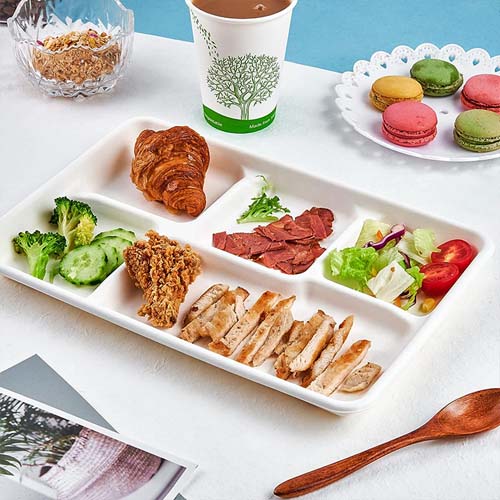
As a professional compostable food containers manufacturer focused exclusively on disposable tableware, we understand that B2B buyers need more than just products—they need a stable supply chain that keeps up with changing global regulations. Our bagasse product line covers over 120 standard sizes, from 2oz sauce cups to 2000ml large catering trays, all pre-certified to EN 13432, FDA, and BPI standards. We have helped over 470 wholesale food packaging distributors across 32 regions smoothly phase out single-use plastic packaging without disrupting their daily order fulfillment.
Custom Manufacturing Capabilities
We offer flexible custom size, custom printing, and low MOQ support for new product trials, alongside full OEM & ODM service to match your unique brand and menu requirements. Whether you are sourcing for a small local coffee shop network or a national catering chain, we have the sturdy, compostable, zero-waste bagasse food packaging solution that fits your budget and compliance timeline.