
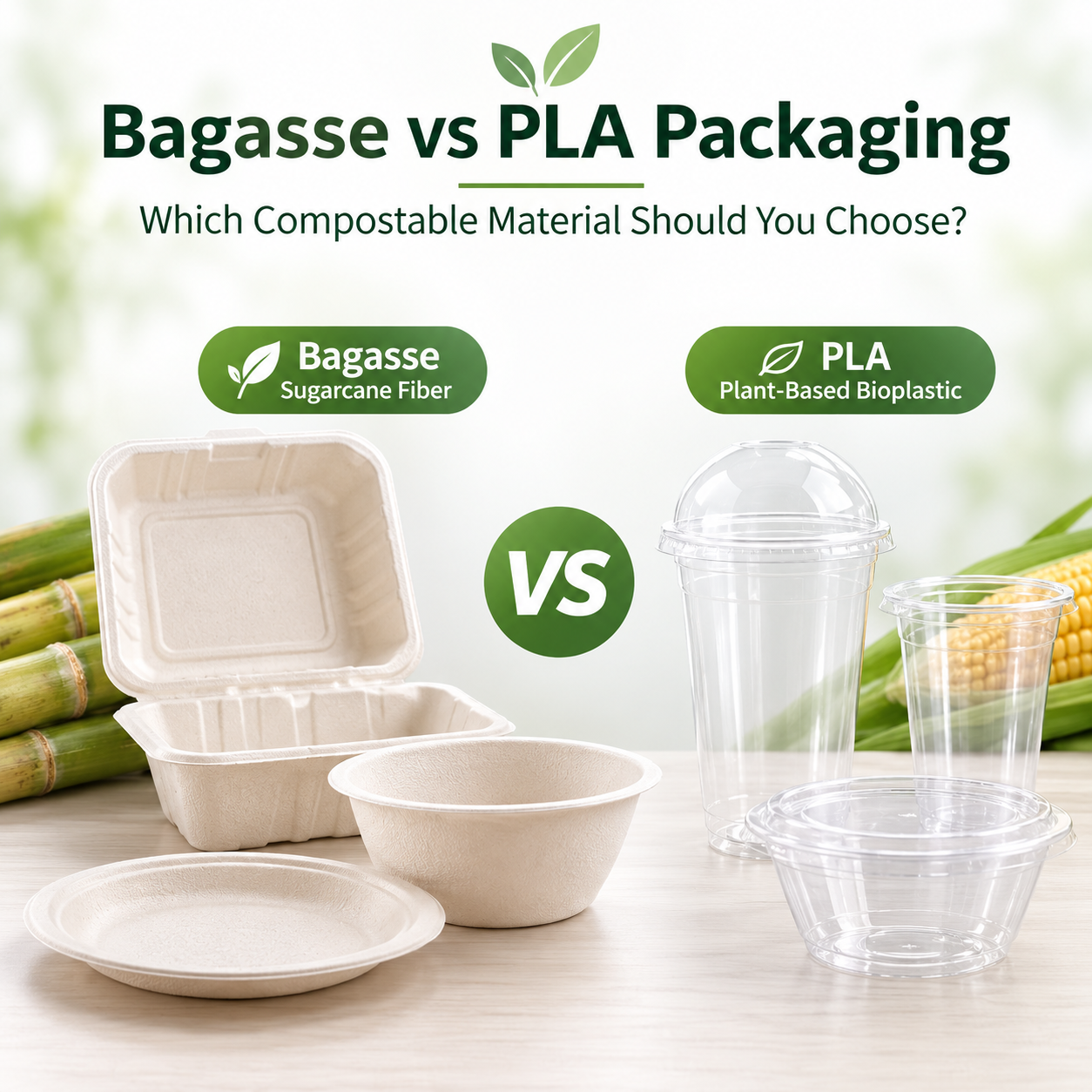
Two strong compostable contenders keep coming up: bagasse made from sugarcane fiber and PLA, a bioplastic from plant sources. This guide looks at how they actually perform, their environmental side, and what matters most when making B2B buying decisions.
Understanding the Materials
Bagasse is basically the leftover fiber after sugarcane gets crushed for juice. Manufacturers mold it into solid plates, trays, clamshells, and bowls.
PLA gets made by fermenting plant sugars, often from corn. The end result is a clear, smooth material that’s great for cold cups, lids, and some utensils.
Core Performance Comparison
Your menu, serving temperatures, and what customers expect usually decide which one wins.
Bagasse really shines with heat. It holds steady up to 100–120°C, so it’s reliable for hot soups, microwaved meals, and anything oily or saucy. PLA is more limited — it starts softening around 55–60°C, which means it’s mainly for cold stuff and can warp or fail if you push it with warmer food.
When it comes to oil and moisture, bagasse has a natural advantage. Its fiber structure manages greasy or wet foods well without needing much extra help. PLA gives you nice clarity and decent protection for lighter cold items, but it can struggle if hot grease sits on it for too long.
Look and feel count too. Bagasse has that sturdy, natural matte finish that feels solid and premium for takeout. PLA offers clean transparency that makes beverages and fresh salads look appealing.
| Feature | Bagasse (Sugarcane Fiber) | PLA (Polylactic Acid) |
| Heat Resistance | 100–120°C, microwave compatible | 55–60°C, not suitable for microwaves |
| Oil/Grease Resistance | Excellent natural barrier | Moderate, better for cold items |
| Transparency | Opaque with natural texture | High clarity and glossy finish |
| Main Uses | Hot meals, trays, clamshell boxes | Cold cups, lids, clear containers |
| Cost Level (per unit) | Usually more competitive | Mid to higher range |
| Origin | Sugarcane agricultural byproduct | Fermented plant sugars |
Industry Data and Standards
Both materials line up with important rules when made correctly:
- EN 13432 for EU markets, focusing on real compostability without toxic residue.
- ASTM D6400 and BPI certification for North America.
- FDA food contact approvals for both.
These help products work in commercial composting systems and fit extended producer responsibility requirements in different countries.
Procurement Recommendations
If you run hot food operations — restaurants, catering, or delivery with greasy or warm items — go for sugarcane bagasse catering serving plates, bakery trays, or sushi takeout trays. They deliver consistent performance and good value.
For cold items like smoothies, salads, or iced drinks, PLA coffee cups or straws give that clean, attractive look customers like.
A lot of teams mix both: bagasse for main dishes and PLA for drinks. Think about your order size, target countries’ rules, and what composting access you actually have locally. Always ask for samples and test them in your own setup — things like stacking strength and humidity during shipping can make a difference.
At Hydebiopack.com we help buyers with full specs and certification paperwork for wholesale orders.
FAQ
Q: Is bagasse or PLA better for microwave use?
A: Bagasse handles short microwave times well, while standard PLA is not recommended because it softens too easily.
Q: How do costs compare for custom disposable food packaging?
A: Bagasse often gives better value on large runs of hot food items. PLA can cost more but works great where clarity matters. Wholesale prices depend on customization and volume — contact us for exact quotes.
Q: Are these materials suitable for eco-friendly food packaging supplier partnerships?
A: Definitely. Both help brands meet sustainability targets, and bagasse especially supports waste reduction since it’s straight from agricultural byproducts.
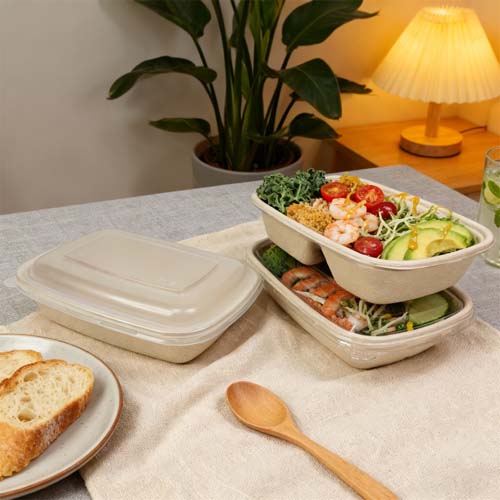
Custom Manufacturing Capabilities
We offer flexible solutions tailored to your business. Custom Size Available, Custom Printing Available, Low MOQ Support, OEM & ODM Service, and Bulk Wholesale Supply ensure seamless integration into your supply chain.
In conclusion, neither material is perfect for everything. Bagasse usually gives more flexibility for hot and oily foodservice situations, while PLA does well for cold items where you want transparency. Take a close look at your menu, operations, and sustainability targets to choose wisely. Check out the full sugarcane bagasse packaging and PLA packaging selection at Hydebiopack.com and work with a reliable compostable food containers manufacturer that actually delivers practical zero-waste results.