
Procurement teams today must find packaging that protects food, controls expenses, and satisfies environmental rules. This complete guide walks through the essentials of biodegradable options, helping buyers evaluate suppliers for practical, compliant solutions in custom disposable food packaging and wholesale volumes.
Background Pressures Shaping the Market
Plastic pollution has pushed governments to act. The EU SUP Directive restricts many single-use items. EPR regulations make companies pay for waste management. PFAS rules are removing certain chemicals from food packaging, with key deadlines in 2025-2027.
The market is responding. Global sustainable food packaging was valued near 228 billion USD in 2024 and is expected to hit 354 billion by 2030 at 7.6% CAGR.
Material Technologies in Practice
Sugarcane bagasse, with its 40-50% cellulose, is molded into strong containers (0.8-1.5mm thick) that resist heat up to 180°C and naturally block oils and grease. Full industrial composting happens in 60-180 days. It works well for hot and fried foods.
PLA from plant starches creates clear cups and lids but softens at around 60°C, better for cold use. Typical thickness is 0.2-0.5mm with good biodegradation performance.
Cornstarch-based materials offer good versatility for various food containers and films. They provide decent barrier properties and compost within similar timeframes, making them suitable for multiple applications.
All food-contact materials need FDA approval. Many operators report smoother operations and positive customer comments after switching to these.
Standards That Matter for Buyers
Look for these proven marks:
- ASTM D6400 (90% biodegradation in 180 days, disintegration in 12 weeks)
- ASTM D6868 for coatings
- EN 13432 for Europe
- BPI Certification (key in North America with PFAS limits)
- FSC for paper sourcing
Suppliers must supply recent test reports. These certifications open doors in different markets and help avoid compliance risks.
Material Performance Comparison
| Feature | Sugarcane Bagasse | PLA | Cornstarch |
| Heat Resistance | 180°C | ~60°C | 100–120°C |
| Oil Resistance | Excellent | Moderate | Moderate to Good |
| Water Resistance | Strong | Good | Moderate to Good |
| Thickness/Weight | 0.8-1.5 mm | 0.2-0.5 mm | 0.3-1.0 mm |
| Compost Period | 60-180 days | 90-180 days | 60-180 days |
| Cost Level | Medium | Higher | Medium |
| Best For | Hot oily meals | Cold drinks | General purpose containers |
Procurement Decision Tips
Evaluate suppliers using these points:
- Unit cost and total value
- MOQ (often 5,000-15,000 for trials)
- Lead time (3-5 weeks standard)
- Printing (CMYK/Pantone, vector files required)
- Certifications (BPI, FDA, EN 13432, PFAS-free)
- Logistics and supply stability
Test samples first. Avoid unverified claims and check local composting options.
FAQ
Key certifications for international buyers? BPI for North America, EN 13432 for Europe, FDA safety, and PFAS compliance.
Suitable for hot and oily food? Bagasse versions usually handle it best due to natural properties.
Shelf life? 12-24 months in proper storage.
Custom Manufacturing Capabilities
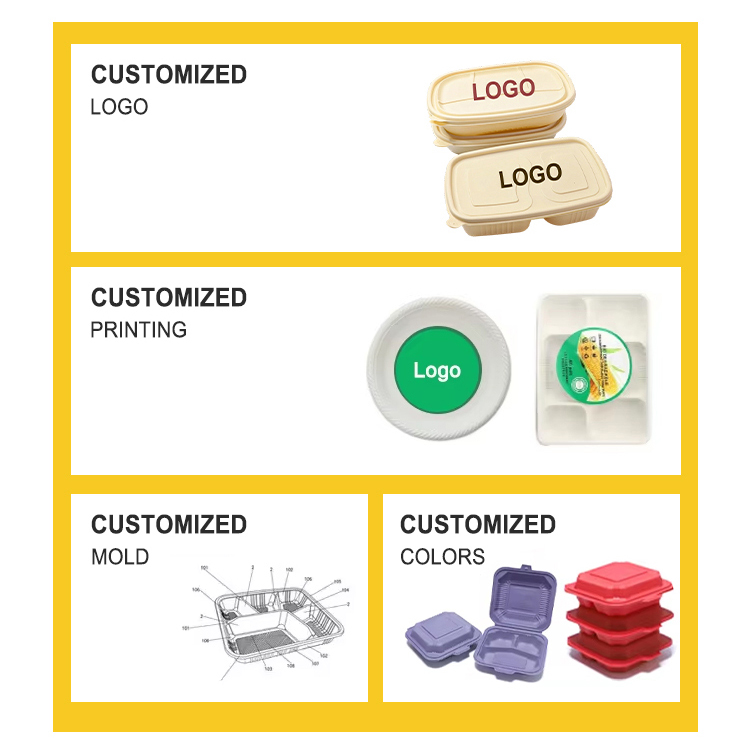
We provide custom size, custom printing, low MOQ support, OEM & ODM service, and bulk wholesale supply for global buyers.
Hydebioapck.com is a trusted compostable food containers manufacturer and eco friendly food packaging supplier, offering reliable custom disposable food packaging and wholesale food packaging with proper certifications.