
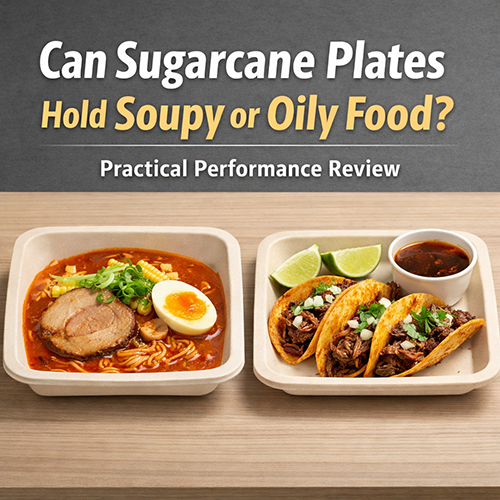
Plenty of folks in the Los Angeles food scene—whether running taco trucks, hosting backyard barbecues, or managing cafe takeout—wonder if switching to plant-based disposables means sacrificing reliability with saucy tacos, ramen to-go, or greasy sliders.
The Real-World Behavior of Bagasse Material Against Messy Foods
Made from the fibrous leftover pulp of sugarcane after juice pressing, these plates get compressed at high pressure and temperature. That process creates a tight, somewhat waxy-feeling surface that naturally pushes back against quick soaking from broths or cooking oils—far more effectively than standard pressed-paper options.
In everyday checks with piping-hot ramen or curry poured right onto the plate, the base remained solid and free of any moisture underneath for 25–40 minutes straight. No bending at the rims occurred when picking it up, and lifting showed zero drips falling through. When dealing with richer dishes such as loaded chili nachos or noodle stir-fries coated in chili oil and soy, a light oily film could appear on top after about 30 minutes, but the overall form stayed rigid—no holes formed, and no oil seeped onto surfaces below.
Simple Side-by-Side Comparison with Common Alternatives
Thin conventional paper plates tend to darken and lose firmness in under 10–15 minutes with substantial sauce or fat, frequently needing extras stacked just to stay intact. Styrofoam holds up temporarily against wetness but offers no environmental upside and often feels low-quality. Some plastic-coated disposables do better purely for blocking liquids, but they add to permanent trash piles since they don’t decompose.
Hydebiopack sugarcane bagasse plates find a solid sweet spot: durable for standard cafe servings of Thai green curry, veggie pasta tossed in olive oil, or even to-go birria tacos drenched in consomé, all while being completely compostable where industrial systems exist. They stand up fine to quick microwaving of 60–90 seconds with no strange scents or distortion, bringing extra ease for fast-paced families or event setups.
Practical Ways to Maximize Performance in Real Scenarios
- Go for deeper profiles or divided styles if liquids dominate your lineup—compartment versions work great to keep sauces apart from drier sides like rice.
- Remember they’re built for normal eating windows (roughly 20–60 minutes), so avoid leaving them in puddles long-term.
- With super-oily choices like buffalo wings or cheese-drenched fries, dabbing excess with a napkin first cuts down on visible gloss while keeping full strength.
From sunny afternoons at Griffith Park gatherings to quick street-food pop-ups, these plates have reliably stepped up where weaker green alternatives gave out, giving confidence without ditching eco values.
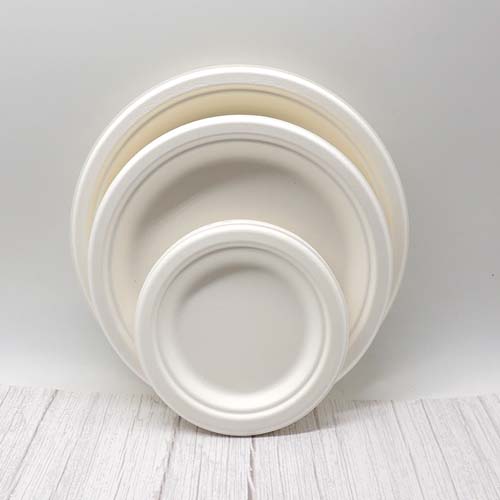
Businesses looking to stand out can explore custom options through hydebiopack, including varied dimensions, compartment layouts, or subtle logo embossing. If you’re planning menus that feature plenty of flavorful, saucy, or oily dishes and want reliable compostable tableware, drop us a line—we’re ready to customize hydebiopack sugarcane bagasse plates exactly for your setup.