
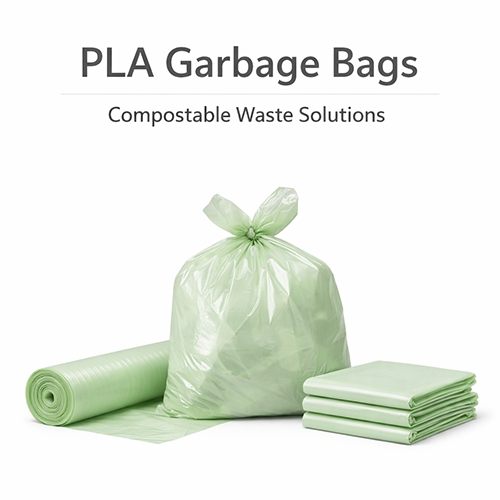
People everywhere are looking for ways to handle household and business trash that don’t leave a permanent mark on the planet. PLA garbage bags step in as a solid alternative for dealing with food waste, yard debris, and other natural discards. Sourced from fermented plant matter, these bags carry loads like regular ones but are built to vanish into the earth cycle under the correct setup.
Inside the Breakdown of PLA Bags
PLA garbage bags begin life as polylactic acid, fermented from starches in things like corn kernels or sweet potatoes. The outcome is a firm yet flexible sheet that copes with sloppy kitchen throwaways or leafy garden piles without splitting right away.
True transformation needs the hot, steamy, microbe-packed world of an industrial compost facility. Once there, the combination of warmth and dampness starts a chain reaction: the material absorbs moisture, which slowly snaps apart the molecular backbone. Tiny organisms jump in next, eating up the broken-down bits until nothing toxic remains—just basic carbon dioxide, water, and soil-enriching leftovers. Certified bags usually finish this job in under half a year when conditions stay right.
This full-circle approach makes PLA garbage bags stand out from products that only pretend to disappear by crumbling into tiny bits.
Solid Reasons to Go with These Bags
PLA garbage bags bring real-world upsides that matter for regular folks and operations:
- They pull from crops harvested year after year, easing off oil drilling for throwaway items.
- When composted properly, the bag and its contents feed back into the ground as useful humus, cutting down on nasty gas releases from buried waste.
- They hold their own against damp or pokey stuff without constant failures.
- They push better habits of sorting organics separately, making community waste programs more effective.
Biggest wins happen through reliable commercial composting channels.
How to Handle PLA Garbage Bags Day to Day
Keep it basic with this routine for PLA garbage bags:
- Hunt for clear approval badges—things like BPI or ASTM D6400 mean the bag passed real-world tests for breaking down cleanly.
- Grab the right volume—kitchen-friendly ones around 10 to 13 gallons usually hug the bin sides nicely without extra strain.
- Stick to allowed items—toss in things like veggie ends, fruit bits, or dry leaves; hold back on anything artificial or off-limits per your area’s rules.
- Seal it up well to trap smells and drips, then get it to a pickup spot or facility fast.
- Stash extras somewhere dry and not too warm—skip spots like sunny shelves or damp closets that speed up unwanted changes.
This keeps everything running smooth and delivers actual good results.
Hydebiopack specializes in tailored PLA garbage bags to match your exact requirements—custom dimensions, varied thicknesses, branded prints, or large-volume orders. Drop us a line for quotes, samples, or advice!