
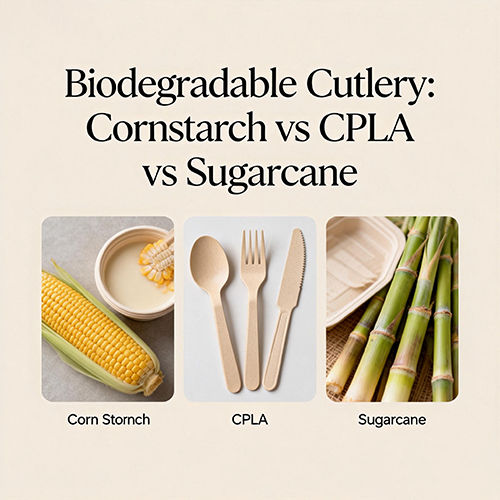
In this article, we will carefully compare the differences between three types of tableware: cornstarch cutlery, CPLA cutlery, and sugarcane cutlery in daily use, so that you can choose the right tableware according to your own needs.
Cornstarch Cutlery: The Easy, Low-Cost Entry
Cornstarch cutlery forms from starch pulled from corn and turned into a simple bioplastic blend. This keeps the pieces feather-light and among the most affordable eco options out there, drawing in small operations or anyone watching every penny.
It shines for quick composting in controlled industrial sites—typically clearing up in three to six months with no nasty residues. Great picks include iced desserts, veggie sides, or dry finger foods at ambient temps. The main limitation hits with warmth: past about 60°C, it tends to lose firmness or warp, especially around fatty sauces that accelerate softening. If your focus stays on chilled or neutral dishes and you’re after an inexpensive way to go green, this delivers smooth and simple results.
CPLA Cutlery: Built for Warmer Servings
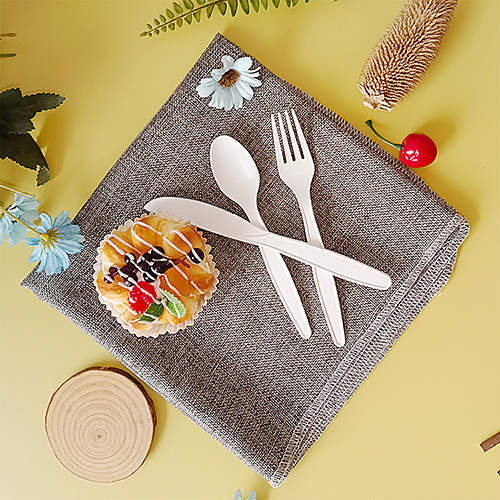
CPLA cutlery takes standard PLA from plant sources like corn and adds a crystallization treatment to ramp up toughness and push heat limits higher—often staying solid around 85–90°C.
This creates a clean, non-glossy look with good snap resistance for daily handling. Spots regularly offering heated broths, steamed items, or warm drinks find CPLA cutlery hits that sweet spot of reliable use and true environmental value.
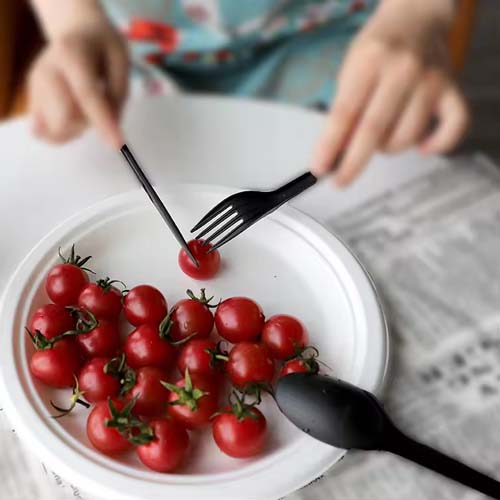
Sugarcane Cutlery: Tough and Resource-Smart
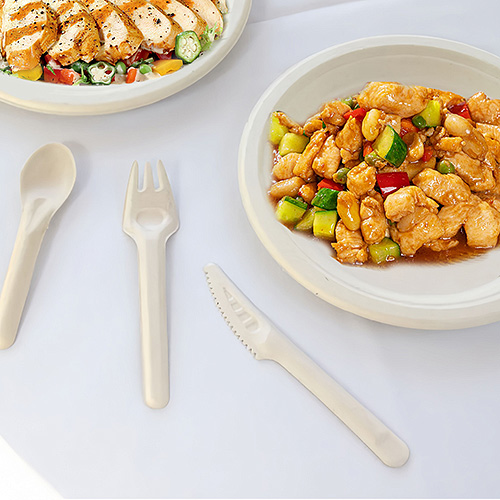
Sugarcane cutlery builds from bagasse, the leftover fibrous pulp after pressing cane for sugar, so it smartly turns farm scrap into functional tools rather than adding to disposal piles. This upcycling starts it off with solid green advantages.
Durability stands front and center—these resist snapping while cutting hearty bites, take microwave heat without issue, and hold against oil or moisture without collapsing. They tolerate broader temperature ranges than many bio alternatives and keep structure through saucy or damp foods. Breakdown runs efficiently: 45 to 90 days in most commercial systems, and quite often faster in home compost thanks to the natural fibers that break down readily. The feel stays naturally textured and earthy, pairing well with relaxed spots or al fresco setups. While it costs slightly more at the start, the reduced breakage and longer practical life make it worthwhile for keeping guests content.
Quick Comparison Table to Guide Your Pick
- Budget priority → Cornstarch cutlery usually wins on price per piece.
- Hot food focus → CPLA cutlery or sugarcane cutlery both handle warmth; sugarcane often edges out for extreme cases.
- Strength for heavy use → Sugarcane cutlery feels most reliable against bending or snapping.
- Compost flexibility → Sugarcane cutlery frequently works in home setups; the others lean toward commercial facilities.
- Sustainability angle → Sugarcane cutlery scores extra for using agricultural leftovers instead of dedicated crops.
Your choice hinges on the foods you serve most. Cold grab-and-go lines? Cornstarch does the job cheaply. Mixed hot and cold? CPLA offers versatility. Greasy, hearty takeout? Sugarcane rarely disappoints.
Hydebiopack supplies cornstarch cutlery, CPLA cutlery, and sugarcane cutlery in various sizes and packs. We handle custom printing, color matching, individual wrapping, and bulk runs tailored to your branding or volume needs. Thinking about a full switch or need help picking the ideal material for your menu? Contact us anytime.