
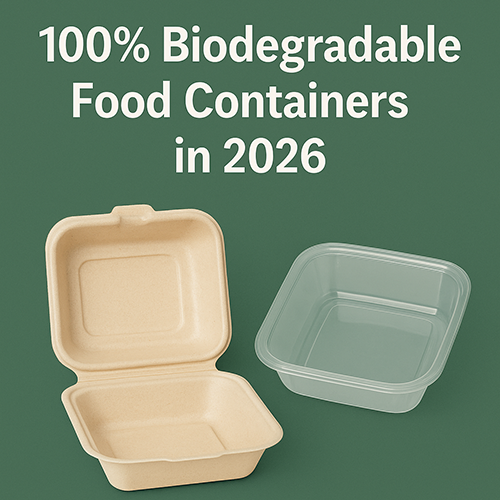
Food delivery isn’t just convenient anymore — it’s the default. But every surge in orders leaves behind a trail of Styrofoam clamshells and plastic bags that take 500+ years to disappear. Meanwhile, diners under 35 now actively avoid brands that don’t walk the sustainability talk, and governments from California to the EU are enforcing strict plastic phase-outs. The turning point in 2026 is that truly functional, cost-effective alternatives finally exist. Made from leftover sugarcane fiber and fermented corn starch, today’s compostable packaging withstands heat, grease, and real-world handling while vanishing completely in under a season.
How to Choose the Right Compostable Food Containers for Your Business
Step 1: Map your menu to the right raw material
Hot pho or biryani bowls? You need thick-walled sugarcane containers that stay rigid at 110 °C+. Cold acai bowls or sushi trays? Transparent PLA-lined boxes give that premium look without fogging. High-fat items like burgers and fries? Select sugarcane grades with plant-based grease barriers now built in at no extra cost.
Step 2: Only accept independently verified certifications
Don’t trust labels that just say “eco” or “green” with no proof. Always look for recognized third-party certificates (such as BPI, OK Compost, or similar official marks) printed clearly on the box. These trusted seals guarantee the packaging is genuinely compostable, contains no harmful chemicals, and won’t secretly include regular plastic.
Step 3: Look beyond sticker price to total operating cost
Upfront, plant-based containers may run 12-28 % more than polystyrene, but cities like San Francisco, Toronto, and London already add surcharges for non-compostable waste. Add free social-media exposure from eco-aware customers, and most chains we supply hit breakeven in 10-16 weeks.
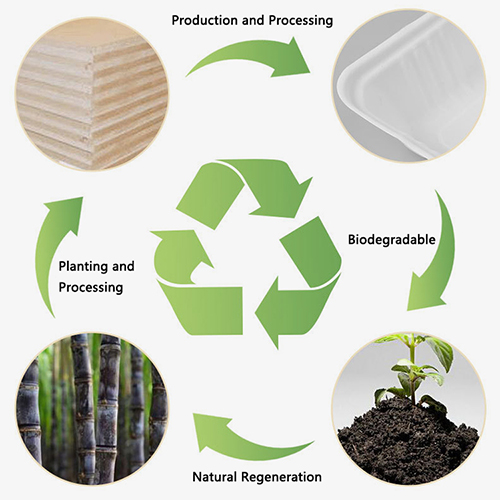
Sugarcane vs PLA: A Side-by-Side Breakdown for Foodservice Pros
- Sugarcane: Byproduct of sugar refining, zero food crop competition. Rock-solid structure, natural oil resistance, safe in microwave and hot cabinet up to 120 °C, fully composts in 45-90 days commercially. First choice for hot meals and delivery.
- PLA from corn starch: Crystal-clear visibility, perfect for chilled display cases, cold drinks, and disposable cutlery. Heat limit around 48-52 °C; needs industrial composting to degrade quickly.
Winning strategy most chains adopt: sugarcane for hot food, PLA for cold lines and utensils.
5 Fast Ways to Roll Out Biodegradable Packaging Without Disruption
- Launch with your three highest-volume takeout items — the switch gets noticed immediately.
- Add one extra “compost” bin in the kitchen; staff adapt in a single shift.
- Print a discreet “Plant-Based • Compostable” line on every item — customers post it themselves.
- Slip a compostable carry bag into every delivery order — costs cents, earns loyalty points.
Plastic bans expand again in 2026; being ready early turns a regulatory headache into a marketing advantage.
At Hydebiopack, we supply only certified, food-grade sugarcane pulp tableware, cornstarch containers, PLA cutlery wholesale, and compostable delivery bags to restaurants, caterers, and brands worldwide.
Want containers designed exclusively for your menu and branding? Drop us a message for a free sample pack and customized wholesale proposal — let’s make your sustainable switch seamless.