
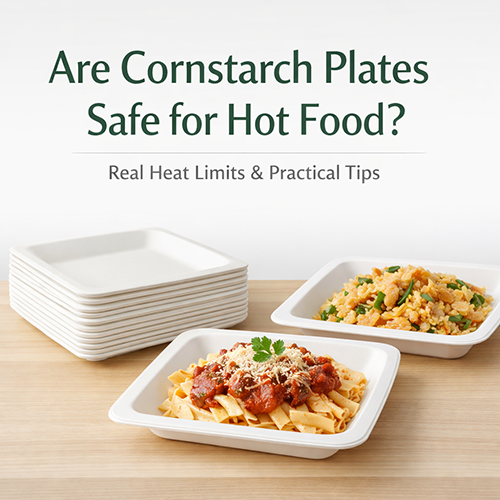
More and more people are asking the same thing: do cornstarch plates hold up when you pile hot food on them, or do they just melt into a sad mess? We’ve tested and sold tons of them for cafes, events, and home use, so we know exactly where they shine and where you need to be careful. Here’s the honest rundown.
What Cornstarch Plates Are Actually Made Of
Everything starts with corn starch extracted from the kernel, turned into a dough-like base and mixed with natural plant fibers plus a small amount of plant-based resin for strength. The blend gets pressed into shape under controlled heat, creating plates that feel sturdy and look clean. In a proper industrial compost facility, they usually break down completely in 90–180 days—nothing like the hundreds of years ordinary plastic takes. No BPA, no phthalates, no fossil-fuel leftovers, which is why parents grab them for kids’ birthdays, why caterers like them for outdoor setups, and why busy households use them nightly. Heat handling depends heavily on how the manufacturer tunes the recipe, but good ones manage normal hot meals just fine if you don’t treat them like oven-proof stoneware.
Real Heat Limits in Everyday Use
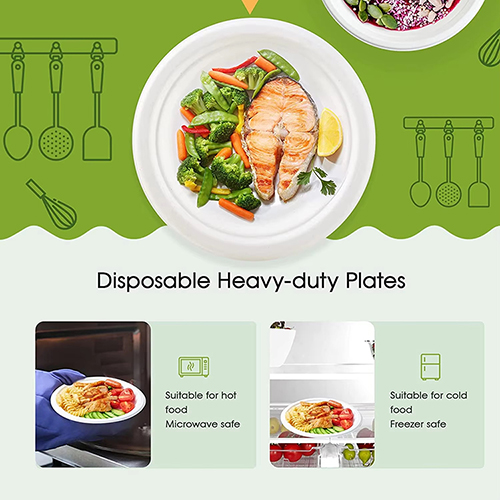
From actual customer feedback and our own kitchen trials, cornstarch plates reliably stay firm up to about 100–115 °C (212–239 °F) for typical serving times. That means hot fried rice, just-cooked lasagna slices, or warm chili bowls are usually no problem. Direct contact with very hot oil straight from the wok, or letting boiling soup sit pooled on the plate for half an hour or more, will start to make the edges soften noticeably—nothing dramatic at first, but you’ll see flex after 20 minutes or so. Microwaving works in quick 60–90 second intervals if the food isn’t extremely hot already. Rule of thumb: if you’re pushing the upper end of the temperature range or dealing with lots of grease, test one plate alone first to see how your particular batch behaves.
How They Stack Up Against Other Options
Put cornstarch plates next to the competition and the differences become clear fast. Regular paper plates soak up sauce and go limp quickly. Many PLA-only versions (often mistaken for basic cornstarch) soften around 55–65 °C and aren’t great for anything steaming. Our cornstarch plates land in a sweet spot: solid enough for most hot mains, pleasant smooth surface, zero chemical leaching worries at moderate temps, and way easier on the planet than foam, polystyrene, or cheap plastic that warps and releases fumes. People who switch for catering lines or food trucks almost always say the performance-to-eco-benefit ratio is noticeably better.
Simple Ways to Use Them Safely with Heat
Follow these practical habits and you’ll get consistent results every time:
- Plate food that’s warm rather than piping straight from the stove—give it a minute or two to drop a few degrees.
- Serve saucy or liquid-heavy dishes right away; don’t let them sit longer than 25–30 minutes.
- For fried or oily items, go with our thicker-rim models—they resist grease penetration much longer.
- Microwave in short bursts with a loose lid or paper towel on top, and check midway to avoid hot spots.
Cornstarch plates are a smart, sustainable way to handle warm food when you use them thoughtfully. They work great for picnics, office catering, quick lunches, family meals—pretty much anywhere single-use is needed.
HydeBioPack specializes in reliable biodegradable tableware that actually performs. We’re set up to make HydeBioPack cornstarch plates fit your exact project. Just contact us—we’ll customize whatever you need.