
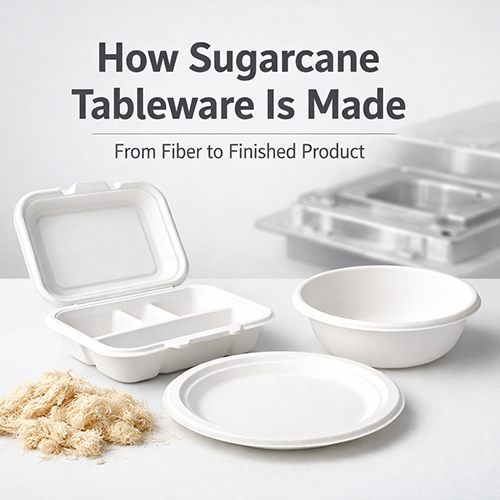
Walk into any busy street food stall or modern cafe and you’ll spot plates and boxes that hold greasy noodles or steaming rice without drama, yet vanish responsibly once the meal ends. These aren’t plastic miracles — they come from the rough, stringy stuff left after sugar mills press cane stalks for juice.
That overlooked farm residue is turned into solid, everyday sugarcane bagasse tableware that actually performs in real kitchens instead of just sounding green on paper. The whole line runs on mechanical muscle, careful heat, and basic water work, keeping things simple and effective.
Starting Raw: Grabbing Bagasse Before It Becomes Trash
Sugar factories smash fresh cane to pull out the sweet liquid, spitting out mountains of wet, tangled fibers called bagasse. Most of it used to sit idle or get torched. Clean, fresh loads are pulled straight from the mills, picking batches with decent fiber length and not too much junk mixed in.
A fast once-over by the team catches obvious rocks, leaves or clumps so only decent material moves ahead. Sugarcane grows fast in warm climates, meaning new bagasse shows up reliably every season. That constant flow gives a renewable base without touching old-growth forests or digging more oil, setting up strong sugarcane bagasse tableware that restaurants and delivery fleets can actually depend on week after week.
First Clean-Up: Washing and Breaking the Fibers Apart
Damp bagasse still carries sticky sugars, dust and softer pith that would ruin the final strength or safety. It is cleaned with high-pressure water jets to rinse everything clean. Then a quick blast of steam knocks down bacteria so the material hits food-grade level early, without loading up on harsh stuff.
Once rinsed, heavy shredders chop the mass into even pieces and sort the tougher outer strands from the fluffier inside bits. After that it is dried just enough — not bone-dry, but stable enough to sit without going moldy while staying workable for the next step.
Turning Fibers into Smooth Pulp
Clean shredded fibers drop into big tanks with plenty of water. Fast-spinning blades and agitators beat the mixture until it becomes a flowing, even slurry that looks like thin, creamy oatmeal.
The slurry then crosses vibrating screens that snag any leftover lumps, leaving a uniform stock ready for shaping.
Shaping Under Heat and Heavy Pressure
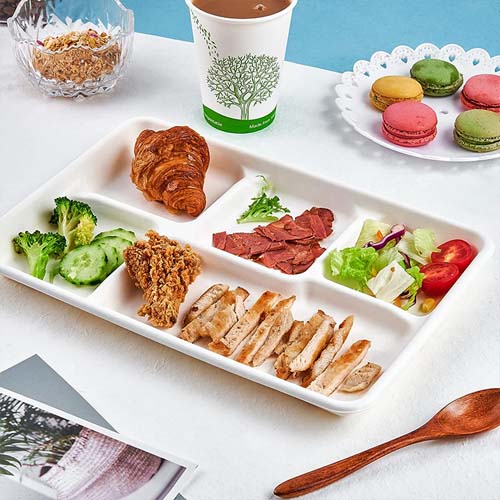
The wet slurry heads to automated lines fitted with custom steel molds shaped like dinner plates, deep bowls, divided lunch trays or flip-top takeaway boxes. Machines drop the exact amount of pulp into each cavity, close the mold tight, and apply serious pressure while heating the surfaces — usually somewhere between 150 and 200 degrees Celsius.
Final Touches: Drying, Trimming and Quality Gate
Right after molding the pieces still feel a bit damp, so they ride through warm drying tunnels that pull the last moisture out evenly without twisting the shape. Cooled items reach trimming stations where spinning blades or scrapers clean every edge for a smooth, safe finish — no rough bits left behind.
Teams then run every batch through real checks: load testing, leak trials, thickness measurement and visual inspection. Light natural grease barriers can be added for extra messy menus, but the main body stays 100% compostable. Simple embossing or printed logos slide in at this stage too, turning plain pieces into quiet brand carriers.
Why This Approach Actually Works Better Day to Day
Plastic and foam pull from limited underground stocks and stick around as waste forever. Lots of paper tableware hides synthetic coatings that kill easy composting. Bagasse tableware flips the script by giving new purpose to something sugar mills already produce in bulk. It uses moderate energy, stands up to real food temperatures and oils, and breaks down cleanly in commercial compost systems — often inside a few months, feeding soil instead of floating in oceans.
Thinking about making the move? Send a message for samples, bulk pricing, or a straight talk about what the operation actually needs. Sugarcane bagasse tableware can be built to fit the menu, the volume, and the values. Hydebiopack is ready — just drop a line and get a custom run started.