
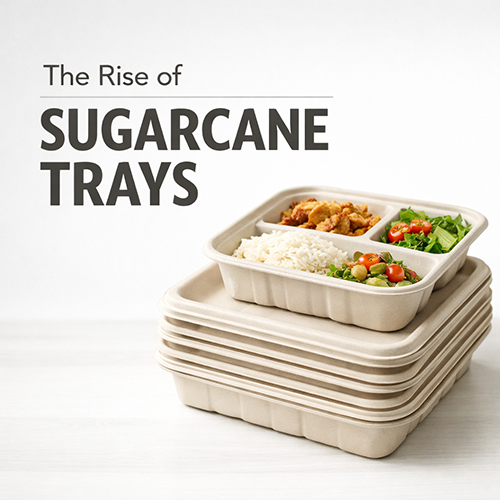
Sugarcane trays, made by pressing the dry pulp leftover from crushing cane for juice (simply called bagasse), offer a straightforward shift. They deliver a firm grip, cope with typical knocks and spills, and ease some pressure on the planet without forcing big changes in routine. Plenty of small eateries and chains are giving them a try since they close the weak spots found in traditional choices.
Breaking Down the Real Durability of Sugarcane Trays
Reliability stands out when trays must support lopsided portions or endure jostling on the way to tables. The dense, interwoven fibers in bagasse create noticeable stiffness despite low overall mass. Foam versions cave in quickly from thumb pressure or stacking, but these trays spread stress more evenly, cutting down on splits or failures mid-transport.
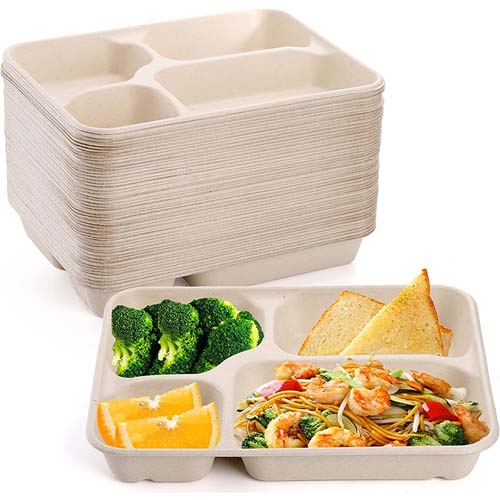
Try this simple check at home or in the kitchen:
- Grab a standard medium-duty bagasse tray (suitable for 700g to about 1.2kg).
- Load it with a variety of items—think rice mixed with sauce, salad greens, and protein.
- Pile a couple on top and carry them around—flex remains limited, unlike polystyrene that flattens noticeably.
This toughness shines in settings like food trucks serving loaded plates, delis arranging meats and cheeses, or markets displaying fresh items where collapse would mean waste.
Heat Performance: How Well Do They Hold Up to Warmth?
A common concern involves moving from cold storage to reheating without trouble. Thanks to the plant-based binders in the fibers, many bagasse trays manage microwave sessions comfortably, often handling up to 100–110°C for short bursts without softening, leaking, or giving off odd smells. They stay far more stable than foam that can droop or release vapors under similar conditions.
For best results follow these steps:
- Look for any “microwave ok” indicator on your specific batch.
- Reheat at medium setting for 60–120 seconds initially.
- Steer clear of very long or extremely high-power cycles to keep edges from browning too much.
This reliability works great for reheating pasta dishes, soups, stir-fries, or warming muffins—delivering convenience without the downsides linked to petroleum materials.
Best Applications for Sugarcane Trays in Real-World Settings
Their mix of oil hold-out, reasonable wetness resistance, and natural breakdown at end-of-use opens doors across operations. Cafes stack them with croissants or cookies since light dampness from fresh bakes doesn’t soften them rapidly. Event planners rely on divided styles to keep mains apart from sides during busy servings. Stores use them for fruit trays or prepared salads, as the surface cushions delicate produce.
Side-by-side look:
- Against foam: Superior stiffness, no risk of collapse under heat, though marginally more substantial.
- Versus standard plastic: Lower impact footprint, comparable containment for saucy meals, best kept away from prolonged dry baking.
- Compared to coated paper: No extra layers required, offering a more organic texture and feel.
They match well with fast-casual counters, office catering, institutional dining, or supermarkets aiming to reduce reliance on conventional disposables step by step.
At Hyde BioPack, we focus on customizing sugarcane trays to match exact business requirements—different depths, compartment layouts, branding embossing, or bulk specs. If your operation could benefit from tailored sizes or performance tweaks, just get in touch. We’re set up for B2B volumes and can discuss samples or production runs that align with your workflow.