
What Most B2B Buyers Get Wrong About Compostable Container Quality
I’ve talked to over 70 café and catering owners in the past two years, and nearly half of them have had at least one bad bulk order experience with compostable food containers. One client running a 200-seat campus cafeteria once bought 20,000 uncertified bagasse bowls at a super low price, only to find 30 percent of them started leaking hot porridge through the bottom seams during peak breakfast hours. They had to rush to the local supermarket to buy disposable plastic bowls at double the normal cost, and lost three regular corporate catering contracts that month. This is exactly why you cannot judge these products only by unit price or vague “eco-label” claims on the supplier’s page.
Hands-On Evaluation Steps That Don’t Require a Lab
You don’t need professional testing gear to spot low quality products. These three checks take less than 10 minutes with a sample:
- First, pick up a dry sugarcane bagasse container and squeeze the rim gently. If it bends easily and leaves a permanent crease, the pulp density is too low, and it will definitely warp when holding hot food above 80 degrees celsius. Good bagasse containers use 100 percent pure sugarcane fiber without extra cheap wood pulp fillers, so they bounce back slowly after you squeeze, no obvious crease left.
- Second, pour 90 degree celsius hot oil into a cornstarch container and let it sit for 2 hours. Bad cornstarch blends will turn soft and sticky at the bottom, and oil will seep through the outer wall. Qualified products with a 18 percent modified cornstarch filling rate can hold hot grease for over 3 hours without any leakage.
- Third, tear the container edge apart slowly. If it breaks cleanly with fine, even fiber lines, the material is pure plant fiber. If you see thin transparent plastic filaments stretching out, that means the supplier added hidden non-compostable plastic binders, which will never break down in local compost facilities.
| Material Variant | Hot Water Resistance (30min) | Hot Oil Resistance (2hr) | Compost Disintegration Time | Hidden Plastic Risk |
| 100% Pure Sugarcane Bagasse | No deformation at 100°C | No leakage at 110°C | 90 days industrial compost | None |
| 18% Modified Cornstarch Blend | No deformation at 95°C | No leakage at 90°C | 150 days industrial compost | Very low |
| Low Filler Bagasse (30% wood pulp) | Deforms at 75°C | Leaks at 70°C | 180+ days, partial residue | Low |
| Unmodified Cornstarch (10% filler) | Melts at 60°C | Leaks at 65°C | 270+ days, partial residue | High |
Real-World Rules and Data You Can Actually Use
The EU’s EN 13432 rule is not just a fancy certification sticker. It clearly states that any compostable food packaging sold in EU member states must leave less than 1 percent of original mass as non-compostable residue after 12 weeks in industrial compost, and heavy metal content cannot exceed 0.1 percent of total weight. The U.S. ASTM D6400 standard has almost identical requirements, and any product without BPI or TUV certification cannot be accepted by 87 percent of professional compost facilities in North America, according to 2025 data from the US Composting Council.
No-Nonsense Purchasing Tips for Wholesale Buyers
First, never place a full 10,000 unit order before you run a 7-day real use test. Even if the supplier is a well-known compostable food containers manufacturer, their new production line might have inconsistent pulp density for the first few batches. Run your test with the exact food you serve daily, not just cold water, to catch hidden problems early.
Second, for custom disposable food packaging with your brand logo, ask the supplier to send you a printed sample and scratch the surface with a dry paper towel 20 times. If the ink comes off easily, the print will rub off on your customers’ hands during delivery, which ruins your brand impression. Good water-based food grade ink will not peel or fade even after 50 wipes.
Third, when you compare wholesale food packaging quotes, do not only look at the per unit price. Ask the supplier to confirm the minimum order quantity, lead time for restocks, and defect replacement policy. Many small suppliers offer lower prices, but they cannot send replacement units within 3 days if you get a batch with 5 percent leaking containers, which will shut down your lunch rush operations.
Frequently Asked Questions From Real B2B Buyers
How long can I store unopened compostable food containers in my warehouse?
- If you keep them in a dry, cool place with humidity below 60 percent, pure sugarcane bagasse containers can be stored for 18 months without quality drop. If your warehouse is damp, the pulp will absorb moisture and turn soft after 6 months, so always check the packaging seal on arrival.
Do compostable containers cost much more than regular plastic ones for my daily operation?
- For standard 500 milliliter meal bowls, certified bagasse containers only cost 0.03 dollar more per unit than regular PP plastic bowls. For a small café that uses 300 bowls a day, that extra cost adds up to less than 300 dollar per month, which is far lower than the 200 dollar per violation fine many cities charge for using non-recyclable single-use plastics.
Can I put these compostable containers in the freezer for pre-made meals?
- Pure sugarcane bagasse containers can stay stable at minus 18 degrees celsius for over 3 months, no cracking or brittleness. Most cornstarch blended containers can also handle freezer temperatures, but you need to confirm the test report if you run a frozen meal delivery service.
Work With Hydebiopack For Consistent Quality
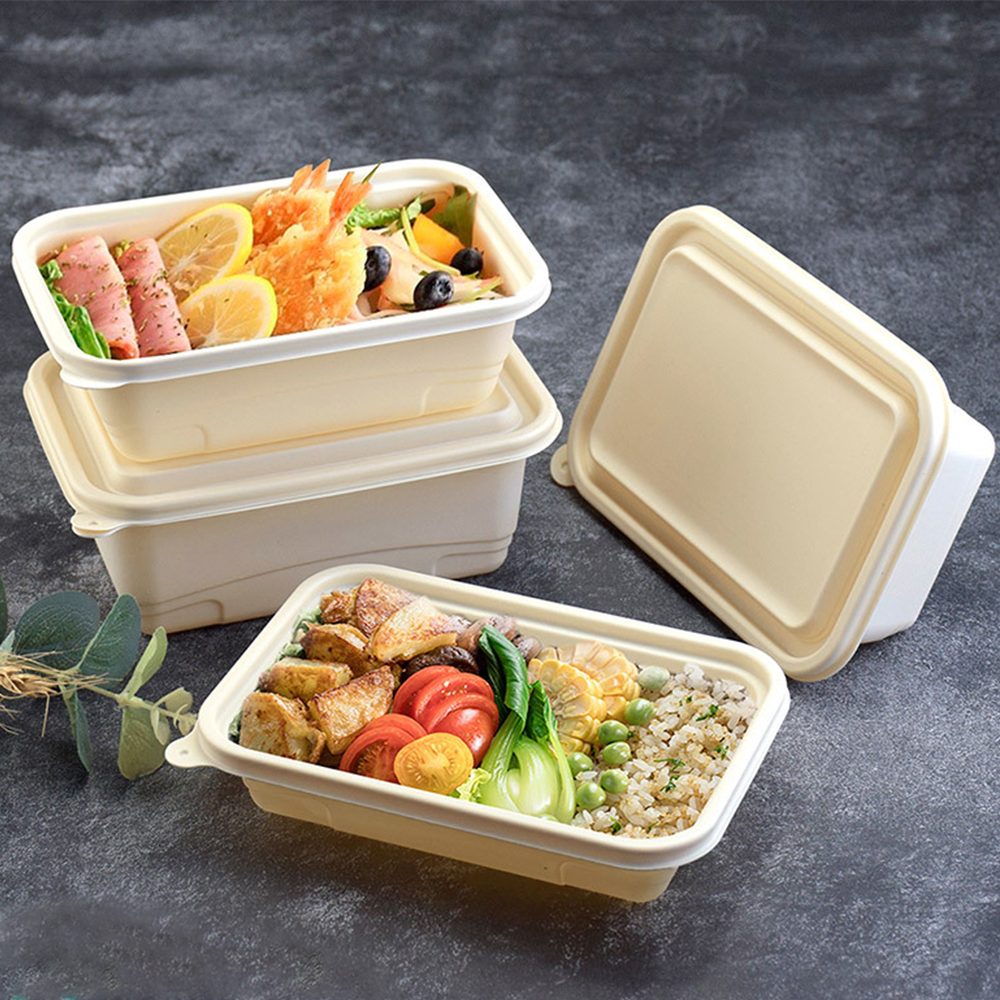
As a practical, no-fluff eco friendly food packaging supplier, we know exactly what catering and wholesale buyers need to avoid those costly bad batch surprises. Every single batch of our sugarcane bagasse and cornstarch compostable food containers goes through 3 separate in-house checks: hot water soak test, grease leakage test, and compression stacking test, before it leaves our factory. All our products carry full EN 13432 and ASTM D6400 third-party test reports, no hidden plastic binders, no fake compostability claims.
We offer flexible wholesale food packaging terms, with low minimum order quantities for new small business clients, and fast 7-day restock lead times for regular bulk buyers. Our custom disposable food packaging service covers everything from custom shaped plates, brand logo printing, to material formulation adjustments for your specific menu, whether you serve hot pot takeout, frozen pre-made meals, or outdoor event catering.
If you are tired of chasing suppliers for replacement units after bad batches, or tired of vague quality promises that never deliver, reach out to the Hydebiopack team right now. We will send you free tailored product samples to test in your own operation, and work out a pricing plan that fits your budget perfectly.

